Auto-generated content.
This description was generated automatically and is pending editorial review.
Inaccuracies are possible. Found a mistake? Contact us.
Source
Animal-derived
Allergen
No
Role in food
Manufacturers use lactic acid cheese cultures to initiate the cheesemaking process, converting milk sugars …
What it is
Lactic acid cheese culture is a starter culture containing live bacteria, typically from the Lactococcus, Lactobacillus, or Streptococcus genera. These bacteria are naturally present in milk and are used to ferment lactose (milk sugar) into lactic acid. This process is essential for developing the characteristic flavor, texture, and aroma of many cheeses.
Why it's used
Manufacturers use lactic acid cheese cultures to initiate the cheesemaking process, converting milk sugars into lactic acid. This acidification helps to coagulate milk proteins, contributing to the desired firmness and texture of cheese. It is also responsible for the tangy flavor profile found in many dairy products.
Health notes
Lactic acid is generally recognized as safe (GRAS) by the FDA when used as a food ingredient. It is a naturally occurring substance in the body and is involved in metabolism. International bodies like JECFA have evaluated lactic acid and its salts, and EFSA has also assessed its safety. Typical dietary intake is considered safe.
Allergen info
Lactic acid itself is not a major allergen. However, cheese cultures are derived from milk, which is one of the nine FDA major allergens.
Note:
This site presents label data from USDA FoodData Central for general information. It is not medical advice.
Check the package label; formulations change.
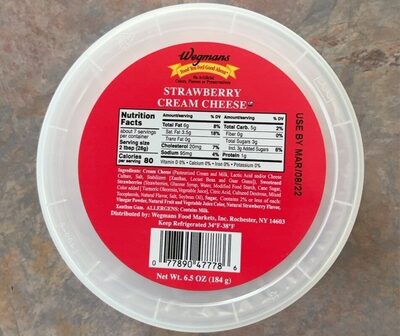 Wegmans Food Markets, Inc.
Strawberry Cream Cheese, Strawberry
286kcal
3.6Protein
21.4Fat
17.9Carbs
Wegmans Food Markets, Inc.
Strawberry Cream Cheese, Strawberry
286kcal
3.6Protein
21.4Fat
17.9Carbs