Light Tuna
Auto-generated content. This description was generated automatically and is pending editorial review. Inaccuracies are possible. Found a mistake? Contact us.
What it is
Light tuna refers to several species of smaller tuna, such as skipjack and yellowfin. It is typically caught using purse seines or pole-and-line methods. After being caught, it is usually cooked, filleted, and canned, often with added water or oil.
Why it's used
Light tuna is primarily used as a protein source in various food products. Its mild flavor and flaky texture make it popular in canned tuna salads, sandwiches, and as a topping for crackers. It is also found in some frozen seafood meals and fish-based appetizers.
Health notes
Light tuna is a source of protein, vitamin D, and selenium. It is also a source of omega-3 fatty acids, though typically less than albacore tuna. Tuna can contain mercury, and the FDA advises certain groups, like pregnant women and young children, to limit consumption of some types of fish. JECFA has evaluated tuna and established guidelines for mercury levels in fish. The FDA considers canned tuna safe when handled and stored properly.
Allergen info
Tuna is a fish, which is one of the 9 FDA major allergens. It does not contain gluten.
Products containing Light Tuna
Compare products →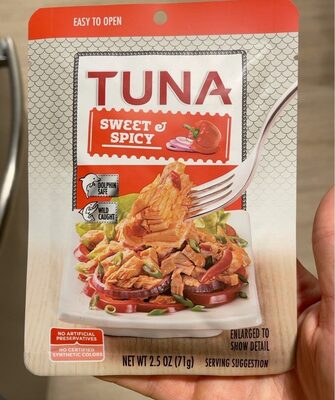 LIDL
Sweet Spicy Tuna, Sweet Spicy
127kcal
18.3Protein
0.7Fat
11.3Carbs
LIDL
Sweet Spicy Tuna, Sweet Spicy
127kcal
18.3Protein
0.7Fat
11.3Carbs
 LIDL
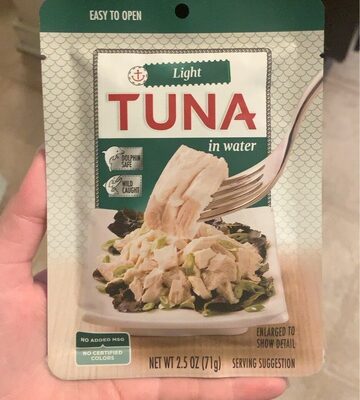
Light Tuna In Water, Light
99kcal
23.9Protein
0.7Fat
0Carbs
LIDL
Light Tuna In Water, Light
99kcal
23.9Protein
0.7Fat
0Carbs
 LIDL
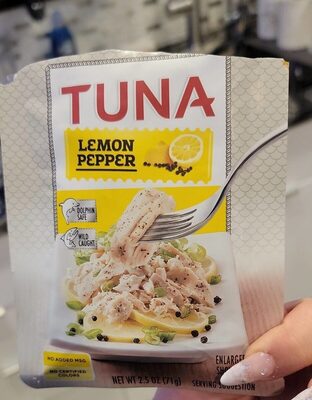
Lemon Pepper Tuna, Lemon Pepper
99kcal
19.7Protein
0Fat
2.8Carbs
Hy-Vee, Inc.
Chunk Light Tuna In Water
107kcal
23.2Protein
0.9Fat
0Carbs
LIDL
Lemon Pepper Tuna, Lemon Pepper
99kcal
19.7Protein
0Fat
2.8Carbs
Hy-Vee, Inc.
Chunk Light Tuna In Water
107kcal
23.2Protein
0.9Fat
0Carbs