Linguine Pasta
Auto-generated content. This description was generated automatically and is pending editorial review. Inaccuracies are possible. Found a mistake? Contact us.
What it is
Linguine is a type of pasta, similar to fettuccine but narrower. It is made from durum wheat flour and water, and sometimes eggs. The dough is typically extruded through a die and then cut into long, flat strands.
Why it's used
Linguine is a staple in Italian cuisine and is often served with sauces. Manufacturers use it as a base for pasta dishes, where it provides a neutral flavor and satisfying texture. It is commonly found in frozen dinners, pasta salads, and prepared entrees.
Health notes
Linguine is a source of carbohydrates and provides some protein and fiber. It is not subject to specific FDA regulations beyond general food safety standards. The U.S. National Academies have not established upper intake levels for pasta. Consumption of refined carbohydrates like white pasta in moderation is generally considered part of a balanced diet.
Allergen info
Linguine is made from wheat, which is one of the 9 FDA major allergens. It also contains gluten.
Products containing Linguine Pasta
Compare products →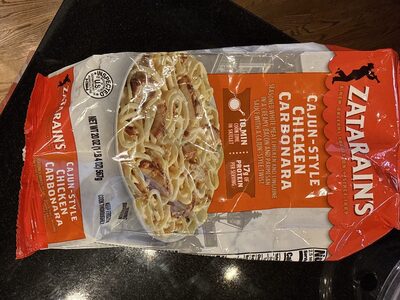 Zatarain's Inc.
Cajun-Style Chicken Carbonara Seasoned White Meat Chicken And Linguine In A Creamy Bacon And Parmesan Flavored Sauce With A Cajun-Style Twist, Cajun-Style Chicken Carbonara
High in sodium — 38% DV per serving
High in saturated fat — 40% DV per serving
179kcal
8.0Protein
7.6Fat
18.8Carbs
Zatarain's Inc.
Cajun-Style Chicken Carbonara Seasoned White Meat Chicken And Linguine In A Creamy Bacon And Parmesan Flavored Sauce With A Cajun-Style Twist, Cajun-Style Chicken Carbonara
High in sodium — 38% DV per serving
High in saturated fat — 40% DV per serving
179kcal
8.0Protein
7.6Fat
18.8Carbs