Organic White Flour
Auto-generated content. This description was generated automatically and is pending editorial review. Inaccuracies are possible. Found a mistake? Contact us.
What it is
Organic white flour is made from the endosperm of wheat berries that have been grown organically, meaning without synthetic pesticides or fertilizers. The bran and germ are removed, leaving the starchy white interior. It is then milled into a fine powder.
Why it's used
Manufacturers use organic white flour as a primary ingredient in baked goods for its structure and texture. It provides the base for breads, cakes, cookies, pastries, and pasta, and is also used as a thickener in sauces and gravies.
Health notes
Organic white flour is generally recognized as safe (GRAS) by the FDA. It is a source of carbohydrates and some B vitamins, though enrichment is common in non-organic white flour. The World Health Organization (WHO) has not classified organic white flour regarding carcinogenicity. Evidence does not suggest adverse health effects from typical consumption.
Allergen info
Wheat is one of the 9 FDA major allergens. Organic white flour is derived from wheat and contains gluten.
Products containing Organic White Flour
Compare products →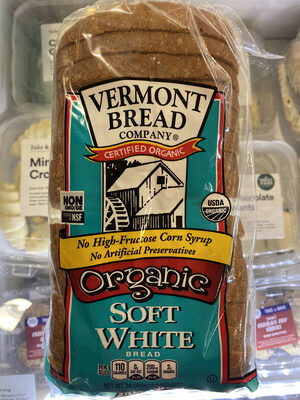 Innisfree Farm Inc
Organic Soft White Bread
275kcal
7.5Protein
2.5Fat
55Carbs
Innisfree Farm Inc
Organic Soft White Bread
275kcal
7.5Protein
2.5Fat
55Carbs
 Nasoya Foods USA, LLC
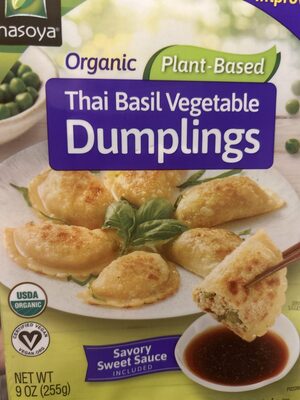
Organic Thai Basil Vegetable Dumplings
High in sodium — 21% DV per serving
176kcal
7.1Protein
2.4Fat
31.8Carbs
Nasoya Foods USA, LLC
Organic Thai Basil Vegetable Dumplings
High in sodium — 21% DV per serving
176kcal
7.1Protein
2.4Fat
31.8Carbs
 Nasoya Foods USA, LLC
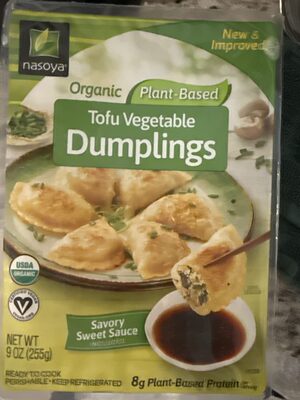
Tofu Vegetable Organic Dumplings, Tofu Vegetable
High in sodium — 26% DV per serving
200kcal
8.2Protein
4.1Fat
34.1Carbs
Nasoya Foods USA, LLC
Tofu Vegetable Organic Dumplings, Tofu Vegetable
High in sodium — 26% DV per serving
200kcal
8.2Protein
4.1Fat
34.1Carbs