Auto-generated content.
This description was generated automatically and is pending editorial review.
Inaccuracies are possible. Found a mistake? Contact us.
Source
Animal-derived
Allergen
No
Role in food
Pork skin is primarily used as a snack food, known as pork rinds or …
What it is
Pork skin is the outer layer of a pig's skin. It is typically fried or baked until crispy, often seasoned for flavor. It is a byproduct of pork processing.
Why it's used
Pork skin is primarily used as a snack food, known as pork rinds or cracklings. It is also sometimes used as a crunchy topping or ingredient in processed meat products.
Health notes
Pork skin is generally recognized as safe (GRAS) by the FDA for use in food. It is a source of protein and collagen but is also high in fat and sodium. JECFA has evaluated pork fat, which is closely related, but no specific evaluation for pork skin was found. Due to its high fat and sodium content, excessive consumption may contribute to health concerns for some individuals.
Allergen info
Pork skin is not derived from any of the 9 FDA major allergens. It does not contain gluten.
Note:
This site presents label data from USDA FoodData Central for general information. It is not medical advice.
Check the package label; formulations change.
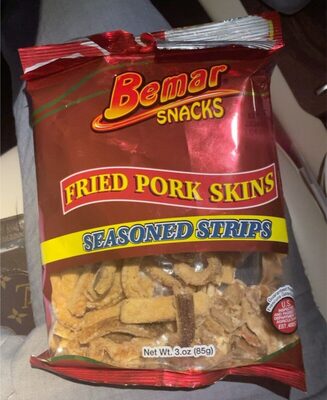 BEMAR SNACKS INC.
Seasoned Strips Fried Pork Skins, Seasoned Strips
High in sodium — 30% DV per serving
500kcal
64.3Protein
25Fat
14.3Carbs
BEMAR SNACKS INC.
Seasoned Strips Fried Pork Skins, Seasoned Strips
High in sodium — 30% DV per serving
500kcal
64.3Protein
25Fat
14.3Carbs