Rendered Duck Fat
Auto-generated content. This description was generated automatically and is pending editorial review. Inaccuracies are possible. Found a mistake? Contact us.
What it is
Rendered duck fat is fat that has been melted and clarified from the body of a duck. The process involves heating the fatty tissues of the duck to separate the pure fat from connective tissues and moisture. It is a traditional cooking fat known for its rich flavor and high smoke point.
Why it's used
Manufacturers use rendered duck fat as a cooking oil and flavoring agent. Its rich, savory taste enhances the flavor of many dishes, and its high smoke point makes it suitable for frying and roasting. It is often found in prepared meats, sauces, and baked goods.
Health notes
Rendered duck fat is generally recognized as safe (GRAS) by the FDA for use in food. It is primarily a source of fat, containing both saturated and unsaturated fats. JECFA has evaluated fats and oils, and EFSA has evaluated various fats. Like other animal fats, it should be consumed in moderation as part of a balanced diet.
Allergen info
Rendered duck fat is not derived from any of the nine FDA major allergens. It does not contain gluten.
Products containing Rendered Duck Fat
Compare products →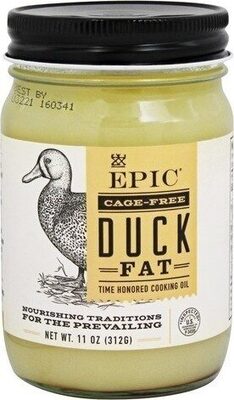 GENERAL MILLS SALES INC.
EPIC Traditional Duck Fat
High in saturated fat — 20% DV per serving
929kcal
0Protein
100Fat
0Carbs
GENERAL MILLS SALES INC.
EPIC Traditional Duck Fat
High in saturated fat — 20% DV per serving
929kcal
0Protein
100Fat
0Carbs