Shredded Asiago Medium Cheese
What is Shredded Asiago Medium Cheese?
Asiago cheese is a semi-hard or hard cow's milk cheese that originated in Italy. 'Medium' refers to its aging period, which gives it a flavor profile between fresh (mild) and aged (sharp) Asiago. Shredded Asiago is simply Asiago cheese that has been cut into small strands for convenience.
Is Shredded Asiago Medium Cheese vegan?
No. Shredded Asiago Medium Cheese is animal-derived, so it is not vegan.
Is Shredded Asiago Medium Cheese a major allergen?
Asiago cheese is derived from milk, which is one of the nine major food allergens identified by the FDA.
What is Shredded Asiago Medium Cheese used for?
Manufacturers add shredded Asiago cheese primarily for its distinct savory, nutty flavor and its texture.
Is Shredded Asiago Medium Cheese safe?
As a food ingredient, Asiago cheese is generally recognized as safe for consumption.
Why it's used
Manufacturers add shredded Asiago cheese primarily for its distinct savory, nutty flavor and its texture. It is often used in prepared meals, baked goods, and as a topping for various dishes where its melting properties and taste are desired.
Health notes
As a food ingredient, Asiago cheese is generally recognized as safe for consumption. It is a source of protein and calcium. There are no specific regulatory statuses or controversies associated with Asiago cheese itself, beyond general dietary considerations for dairy products.
Allergen info
Asiago cheese is derived from milk, which is one of the nine major food allergens identified by the FDA.
Foods that contain Shredded Asiago Medium Cheese
Compare products →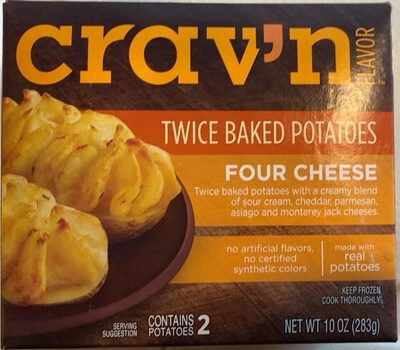 Topco Associates, Inc.
Four Cheese Twice Baked Potatoes With A Creamy Blend Of Sour Cream, Cheddar, Parmesan, Asiago And Monterey Jack Cheeses Twice Baked Potatoes, Four Cheese
High in sodium — 24% DV per serving
High in saturated fat — 45% DV per serving
234kcal
6.9Protein
9.7Fat
29.0Carbs
Topco Associates, Inc.
Four Cheese Twice Baked Potatoes With A Creamy Blend Of Sour Cream, Cheddar, Parmesan, Asiago And Monterey Jack Cheeses Twice Baked Potatoes, Four Cheese
High in sodium — 24% DV per serving
High in saturated fat — 45% DV per serving
234kcal
6.9Protein
9.7Fat
29.0Carbs
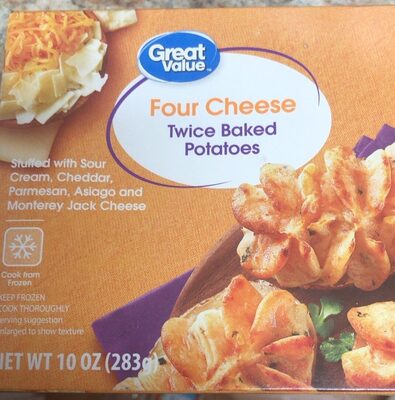 Wal-Mart Stores, Inc.
Four Cheese Stuffed With Sour Cream, Cheddar, Parmesan, Asiago And Monterey Jack Cheese Twice Baked Potatoes, Four Cheese
High in sodium — 24% DV per serving
High in saturated fat — 45% DV per serving
228kcal
6.9Protein
9.7Fat
28.3Carbs
McCain Foods USA, Inc.
Potato, Spinach & Asiago Veggie Taters, Potato, Spinach & Asiago
High in sodium — 27% DV per serving
209kcal
4.4Protein
7.7Fat
29.7Carbs
Wakefern Food Corporation
Specialty, Three Cheese Semolina Loaf, Three Cheese
298kcal
12.3Protein
5.3Fat
50.9Carbs
Wal-Mart Stores, Inc.
Four Cheese Stuffed With Sour Cream, Cheddar, Parmesan, Asiago And Monterey Jack Cheese Twice Baked Potatoes, Four Cheese
High in sodium — 24% DV per serving
High in saturated fat — 45% DV per serving
228kcal
6.9Protein
9.7Fat
28.3Carbs
McCain Foods USA, Inc.
Potato, Spinach & Asiago Veggie Taters, Potato, Spinach & Asiago
High in sodium — 27% DV per serving
209kcal
4.4Protein
7.7Fat
29.7Carbs
Wakefern Food Corporation
Specialty, Three Cheese Semolina Loaf, Three Cheese
298kcal
12.3Protein
5.3Fat
50.9Carbs
Learn more
Auto-generated content. This description was generated automatically and is pending editorial review. Inaccuracies are possible. Found a mistake? Contact us.