White Fudge Coating
Auto-generated content. This description was generated automatically and is pending editorial review. Inaccuracies are possible. Found a mistake? Contact us.
What it is
White fudge coating is a confectionary topping made primarily from sugar, vegetable oil (often palm kernel or coconut oil), and milk solids. It is created by melting and blending these ingredients, sometimes with added flavorings like vanilla, and then coating a food product with the mixture. The coating solidifies upon cooling, providing a sweet, firm exterior.
Why it's used
Manufacturers use white fudge coating to add sweetness, a creamy texture, and visual appeal to a variety of baked goods and candies. Its smooth finish and vanilla-like flavor make it a popular choice for cookies, cakes, snack cakes, and confectionery items, enhancing both taste and presentation.
Health notes
White fudge coating is generally recognized as safe (GRAS) by the FDA when used as intended. It is primarily composed of sugar and fat, and like all foods high in these components, excessive consumption can contribute to calorie intake. Regulatory bodies like JECFA have evaluated the individual ingredients used in white fudge coatings. No specific health concerns are associated with typical consumption levels of the coating itself.
Allergen info
White fudge coating is often derived from milk and may contain soy (lecithin) or coconut (oil), which are among the 9 FDA major allergens. It is not derived from wheat, so it is typically gluten-free, but cross-contamination is possible in manufacturing.
Products containing White Fudge Coating
Compare products →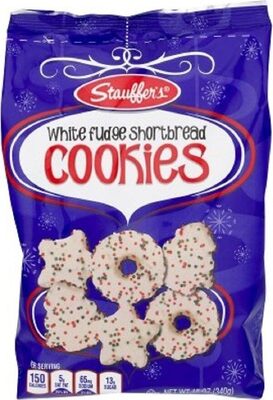 D. F. Stauffer Biscuit Co. Inc
White Fudge Covered Shortbread Cookies
High in saturated fat — 25% DV per serving
High in added sugars — 26% DV per serving
500kcal
3.3Protein
23.3Fat
70Carbs
Target Stores
White Fudge Covered Shortbread Cookies, White Fudge
High in saturated fat — 23% DV per serving
483kcal
3.5Protein
20.7Fat
75.9Carbs
Target Stores
White Fudge Covered Cookies With Sprinkles, White Fudge
High in saturated fat — 25% DV per serving
500kcal
3.6Protein
21.4Fat
75Carbs
Target Stores
White Fudge Animal Cookies With Bunny, Chick And Egg Shapes, White Fudge
High in saturated fat — 22% DV per serving
High in added sugars — 24% DV per serving
500kcal
3.6Protein
21.4Fat
71.4Carbs
D. F. Stauffer Biscuit Co. Inc
White Fudge Covered Shortbread Cookies
High in saturated fat — 25% DV per serving
High in added sugars — 26% DV per serving
500kcal
3.3Protein
23.3Fat
70Carbs
Target Stores
White Fudge Covered Shortbread Cookies, White Fudge
High in saturated fat — 23% DV per serving
483kcal
3.5Protein
20.7Fat
75.9Carbs
Target Stores
White Fudge Covered Cookies With Sprinkles, White Fudge
High in saturated fat — 25% DV per serving
500kcal
3.6Protein
21.4Fat
75Carbs
Target Stores
White Fudge Animal Cookies With Bunny, Chick And Egg Shapes, White Fudge
High in saturated fat — 22% DV per serving
High in added sugars — 24% DV per serving
500kcal
3.6Protein
21.4Fat
71.4Carbs