Whole Brown Flaxseed
Auto-generated content. This description was generated automatically and is pending editorial review. Inaccuracies are possible. Found a mistake? Contact us.
What it is
Whole brown flaxseed comes from the flax plant (Linum usitatissimum), which is grown for its seeds, fiber, and oil. The seeds are small, flat, and oval-shaped, with a typically brown color. They are harvested and cleaned for use in food products.
Why it's used
Flaxseed is added to foods for its nutritional content, particularly fiber and omega-3 fatty acids. It can also contribute a nutty flavor and a slightly crunchy texture. It is commonly found in baked goods like crackers, muffins, and breads, as well as in snack mixes.
Health notes
Flaxseed is generally recognized as safe (GRAS) by the FDA for use in food. It is a source of dietary fiber, lignans, and alpha-linolenic acid (ALA), an omega-3 fatty acid. Some research suggests that flaxseed may have benefits for heart health and digestion, but more studies are needed. JECFA has evaluated flaxseed and did not set a numeric limit (ADI not specified).
Allergen info
Flaxseed is not one of the nine major allergens recognized by the FDA. It does not contain gluten.
Products containing Whole Brown Flaxseed
Compare products →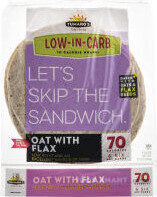 United Natural Foods, Inc.
Tumaro's, Oat With Flax
175kcal
12.5Protein
5Fat
32.5Carbs
Rubicon Enterprises, Inc.
Rubicon Bakers, Fruit & Bran Muffins
366kcal
5.6Protein
14.1Fat
54.9Carbs
United Natural Foods, Inc.
Tumaro's, Oat With Flax
175kcal
12.5Protein
5Fat
32.5Carbs
Rubicon Enterprises, Inc.
Rubicon Bakers, Fruit & Bran Muffins
366kcal
5.6Protein
14.1Fat
54.9Carbs
 That's How We Roll LLC
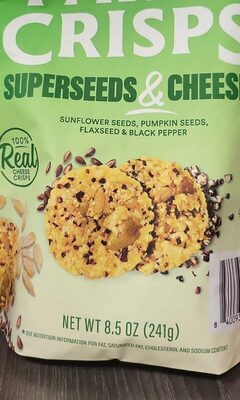
Superseeds & Cheese Sunflower Seeds, Pumpkin Seeds, Flaxseed & Black Pepper Oven-Baked Cheese Crisps, Superseeds & Cheese
High in saturated fat — 30% DV per serving
552kcal
44.8Protein
41.4Fat
10.3Carbs
Wholesome Goodness, LLC
Multi Grain & Omega Tortilla Chips, Multi Grain & Omega
510kcal
6.1Protein
22.4Fat
69.4Carbs
That's How We Roll LLC
Superseeds & Cheese Sunflower Seeds, Pumpkin Seeds, Flaxseed & Black Pepper Oven-Baked Cheese Crisps, Superseeds & Cheese
High in saturated fat — 30% DV per serving
552kcal
44.8Protein
41.4Fat
10.3Carbs
Wholesome Goodness, LLC
Multi Grain & Omega Tortilla Chips, Multi Grain & Omega
510kcal
6.1Protein
22.4Fat
69.4Carbs
 That's How We Roll LLC
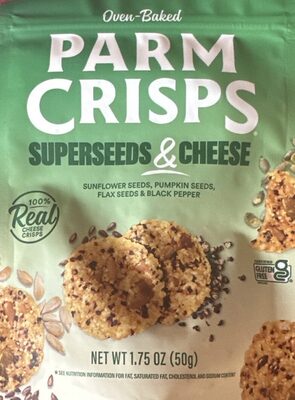
Superseeds & Cheese Sunflower Seeds, Pumpkin Seeds, Flax Seeds & Black Pepper Oven-Baked Cheese Crisps, Superseeds & Cheese
High in saturated fat — 30% DV per serving
552kcal
44.8Protein
41.4Fat
10.3Carbs
Wholesome Goodness, LLC
Multi Grain & Flax Tortilla Chips, Multi Grain & Flax
500kcal
7.1Protein
21.4Fat
67.9Carbs
That's How We Roll LLC
Superseeds & Cheese Sunflower Seeds, Pumpkin Seeds, Flax Seeds & Black Pepper Oven-Baked Cheese Crisps, Superseeds & Cheese
High in saturated fat — 30% DV per serving
552kcal
44.8Protein
41.4Fat
10.3Carbs
Wholesome Goodness, LLC
Multi Grain & Flax Tortilla Chips, Multi Grain & Flax
500kcal
7.1Protein
21.4Fat
67.9Carbs