Whole Grain Rolled Barley
What is Whole Grain Rolled Barley?
Whole grain rolled barley is a type of barley grain that has been steamed and then flattened into flakes. Barley is a cereal grain grown worldwide, with a nutty flavor and chewy texture. It is a good source of fiber and nutrients.
Is Whole Grain Rolled Barley vegan?
Whole Grain Rolled Barley is not animal-derived. Products that contain it can still include other animal-derived ingredients, so check the full ingredient list.
Is Whole Grain Rolled Barley gluten-free?
Barley contains gluten, a protein that can cause adverse reactions in individuals with celiac disease or non-celiac gluten sensitivity.
What is Whole Grain Rolled Barley used for?
Manufacturers add rolled barley to foods for its texture, fiber content, and mild flavor.
Is Whole Grain Rolled Barley safe?
Barley is generally recognized as safe (GRAS) by the FDA.
Why it's used
Manufacturers add rolled barley to foods for its texture, fiber content, and mild flavor. It is often found in breakfast cereals, granola bars, and baked goods like bread and muffins. It can also be used as a thickener in soups and stews.
Health notes
Barley is generally recognized as safe (GRAS) by the FDA. It is a good source of dietary fiber, particularly beta-glucan, which may help manage cholesterol levels. The World Health Organization (WHO) has not set a specific ADI for barley, as it is considered a food ingredient. Evidence suggests that regular consumption of whole grains like barley is associated with a reduced risk of certain chronic diseases.
Allergen info
Barley contains gluten, a protein that can cause adverse reactions in individuals with celiac disease or non-celiac gluten sensitivity. It is not one of the nine FDA major allergens.
Foods that contain Whole Grain Rolled Barley
Compare products →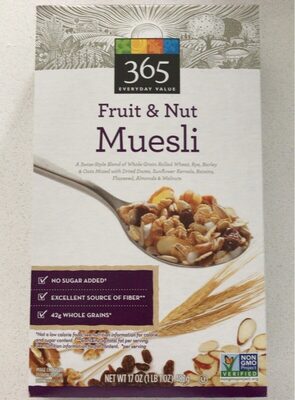 Whole Foods Market, Inc.
Fruit & Nut Muesli A Swiss-Style Blend Of Whole Grain Rolled Wheat, Rye, Barley & Oats Mixed With Dried Dates, Sunflower Kernels, Raisins, Flaxseed, Almonds & Walnuts, Fruit & Nut Muesli
391kcal
10.9Protein
7.8Fat
73.4Carbs
Whole Foods Market, Inc.
Fruit & Nut Muesli A Swiss-Style Blend Of Whole Grain Rolled Wheat, Rye, Barley & Oats Mixed With Dried Dates, Sunflower Kernels, Raisins, Flaxseed, Almonds & Walnuts, Fruit & Nut Muesli
391kcal
10.9Protein
7.8Fat
73.4Carbs
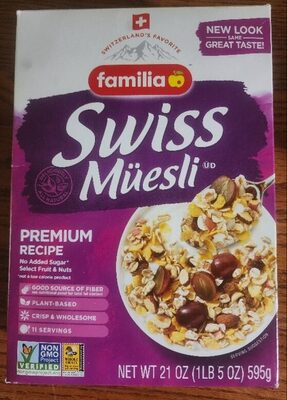 Specialty Food Services Ltd.
Premium Recipe Swiss Mesli
364kcal
12.7Protein
9.1Fat
56.4Carbs
Wegmans Food Markets, Inc.
Oats With Dates, Sunflower Seeds, Raisins, Flax Seeds, Almonds And Walnuts Muesli, Oats With Dates, Sunflower Seeds, Raisins, Flax Seeds, Almonds And Walnuts
375kcal
10.7Protein
8.0Fat
69.6Carbs
Meijer, Inc.
Granola, Fruit & Grains Fruit & Nut Cereal With Sweet Chewy Raisins, Dates, Rolled Barley Flakes, Pecans, Bran Flakes, Crunchy Oat Clusters & Crisp Corn Flakes, Granola, Fruit & Grains
404kcal
7.7Protein
6.7Fat
76.9Carbs
Specialty Food Services Ltd.
Premium Recipe Swiss Mesli
364kcal
12.7Protein
9.1Fat
56.4Carbs
Wegmans Food Markets, Inc.
Oats With Dates, Sunflower Seeds, Raisins, Flax Seeds, Almonds And Walnuts Muesli, Oats With Dates, Sunflower Seeds, Raisins, Flax Seeds, Almonds And Walnuts
375kcal
10.7Protein
8.0Fat
69.6Carbs
Meijer, Inc.
Granola, Fruit & Grains Fruit & Nut Cereal With Sweet Chewy Raisins, Dates, Rolled Barley Flakes, Pecans, Bran Flakes, Crunchy Oat Clusters & Crisp Corn Flakes, Granola, Fruit & Grains
404kcal
7.7Protein
6.7Fat
76.9Carbs
Learn more
Auto-generated content. This description was generated automatically and is pending editorial review. Inaccuracies are possible. Found a mistake? Contact us.