Auto-generated content.
This description was generated automatically and is pending editorial review.
Inaccuracies are possible. Found a mistake? Contact us.
Source
Not animal-derived
Allergen
No
Role in food
Manufacturers add xanthan and carob bean gum to foods to improve texture, thicken sauces …
What it is
Xanthan gum is a polysaccharide produced by the fermentation of sugar by the bacterium Xanthomonas campestris. Carob bean gum, also known as locust bean gum, is a thickening agent derived from the seeds of the carob tree. When used together, they create a synergistic effect, providing enhanced thickening and stabilizing properties.
Why it's used
Manufacturers add xanthan and carob bean gum to foods to improve texture, thicken sauces and dressings, and stabilize emulsions. They are often found in salad dressings, baked goods, dairy products, and gluten-free products.
Health notes
Xanthan gum is generally recognized as safe (GRAS) by the FDA. Both xanthan gum and carob bean gum are considered dietary fibers. Some studies suggest that consuming large amounts of xanthan gum may lead to digestive discomfort, such as bloating or gas, but this is not typically seen at levels found in food. JECFA and EFSA have evaluated xanthan gum and established acceptable daily intakes.
Allergen info
Neither xanthan gum nor carob bean gum are derived from any of the 9 FDA major allergens. They do not contain gluten.
Note:
This site presents label data from USDA FoodData Central for general information. It is not medical advice.
Check the package label; formulations change.
 Chuckanut Bay Foods, LLC
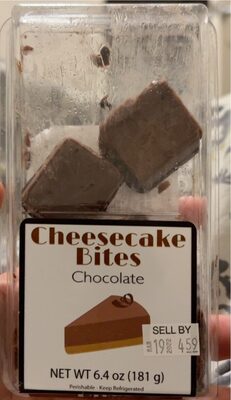
Chocolate Covered Chocolate Cheesecake Bites, Chocolate
High in saturated fat — 20% DV per serving
391kcal
—Protein
26.1Fat
34.8Carbs
Chuckanut Bay Foods, LLC
Chocolate Covered Pumpkin Cheesecake Bites, Chocolate Covered Pumpkin
High in saturated fat — 20% DV per serving
391kcal
4.3Protein
26.1Fat
34.8Carbs
Chuckanut Bay Foods, LLC
Chocolate Covered Chocolate Cheesecake Bites, Chocolate
High in saturated fat — 20% DV per serving
391kcal
—Protein
26.1Fat
34.8Carbs
Chuckanut Bay Foods, LLC
Chocolate Covered Pumpkin Cheesecake Bites, Chocolate Covered Pumpkin
High in saturated fat — 20% DV per serving
391kcal
4.3Protein
26.1Fat
34.8Carbs