Alaskan Pollock Pacific Whiting
Auto-generated content. This description was generated automatically and is pending editorial review. Inaccuracies are possible. Found a mistake? Contact us.
What it is
Alaskan pollock (Theragra chalcogramma) is a white fish found in the North Pacific Ocean. It is a lean, mild-flavored fish that is often processed into fillets, surimi (fish paste), and other seafood products. It is a significant commercial fishery product.
Why it's used
Pollock is often used as a lower-cost alternative to other white fish like cod or haddock. It is commonly found in processed seafood products such as imitation crab meat, fish sticks, and canned tuna. Its mild flavor and flaky texture make it versatile in various dishes.
Health notes
Alaskan pollock is a source of protein and omega-3 fatty acids. The FDA considers it safe for consumption. Regulatory bodies like JECFA have evaluated fish and shellfish, but specific evaluations for Alaskan pollock are not widely publicized. Like other seafood, it can contain mercury, though pollock is generally considered to have low mercury levels.
Allergen info
Alaskan pollock is a type of fish, which is one of the 9 major allergens identified by the FDA. Consumers with fish allergies should avoid it.
Products containing Alaskan Pollock Pacific Whiting
Compare products →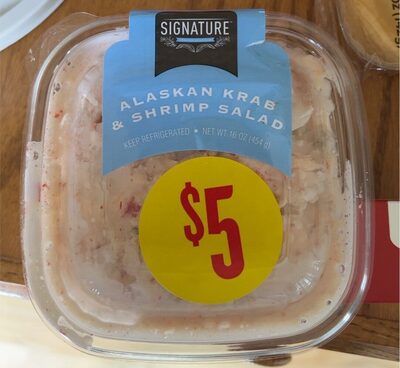 Morski Brands, Inc.
Alaskan Krab & Shrimp Salad, Alaskan Krab & Shrimp
High in sodium — 23% DV per serving
High in saturated fat — 22% DV per serving
330kcal
7Protein
30Fat
8Carbs
Morski Brands, Inc.
Heat & Eat Krab Dip
286kcal
7.1Protein
25Fat
—Carbs
Morski Brands, Inc.
Alaskan Krab Salad, Alaskan Krab
High in sodium — 27% DV per serving
High in saturated fat — 25% DV per serving
330kcal
5Protein
—Fat
8Carbs
Morski Brands, Inc.
Cajun Krab Salad, Cajun Krab
179kcal
3.6Protein
16.1Fat
10.7Carbs
Winn-Dixie Stores, Inc.
Seafood Crab & Shrimp Salad
255kcal
7.3Protein
20Fat
14.6Carbs
Morski Brands, Inc.
Alaskan Krab & Shrimp Salad, Alaskan Krab & Shrimp
High in sodium — 23% DV per serving
High in saturated fat — 22% DV per serving
330kcal
7Protein
30Fat
8Carbs
Morski Brands, Inc.
Heat & Eat Krab Dip
286kcal
7.1Protein
25Fat
—Carbs
Morski Brands, Inc.
Alaskan Krab Salad, Alaskan Krab
High in sodium — 27% DV per serving
High in saturated fat — 25% DV per serving
330kcal
5Protein
—Fat
8Carbs
Morski Brands, Inc.
Cajun Krab Salad, Cajun Krab
179kcal
3.6Protein
16.1Fat
10.7Carbs
Winn-Dixie Stores, Inc.
Seafood Crab & Shrimp Salad
255kcal
7.3Protein
20Fat
14.6Carbs