Cheddar/parmesan/low Moisture Mozzarella Cheeses
Auto-generated content. This description was generated automatically and is pending editorial review. Inaccuracies are possible. Found a mistake? Contact us.
What it is
These are hard, aged cheeses made from cow's milk. They are produced by draining off whey and aging the curd, which develops their firm texture and sharp, nutty flavors. The specific type of cheese (cheddar, parmesan, mozzarella) depends on the milk used, aging process, and added cultures.
Why it's used
These cheeses are added for their rich flavor and texture. They melt well and are commonly found in frozen breakfast items, baked goods like biscuits, and prepared meat dishes. Their savory taste enhances a wide variety of savory packaged foods.
Health notes
Cheeses are a source of calcium and protein. Like all dairy products, they contain lactose and saturated fat. The FDA considers these cheeses to be generally recognized as safe (GRAS) when used as food ingredients. International bodies like JECFA and EFSA have evaluated cheese and dairy products.
Allergen info
Cheese is derived from milk, which is one of the 9 FDA major allergens. It does not contain gluten.
Products containing Cheddar/parmesan/low Moisture Mozzarella Cheeses
Compare products →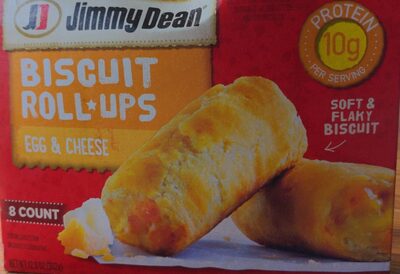 The Hillshire Brands Company
Egg & Cheese Biscuit Roll-Ups, Egg & Cheese
High in sodium — 31% DV per serving
High in saturated fat — 35% DV per serving
High in cholesterol — 30% DV per serving
289kcal
11.1Protein
14.4Fat
27.8Carbs
The Hillshire Brands Company
Egg & Cheese Biscuit Roll-Ups, Egg & Cheese
High in sodium — 31% DV per serving
High in saturated fat — 35% DV per serving
High in cholesterol — 30% DV per serving
289kcal
11.1Protein
14.4Fat
27.8Carbs
 The Hillshire Brands Company
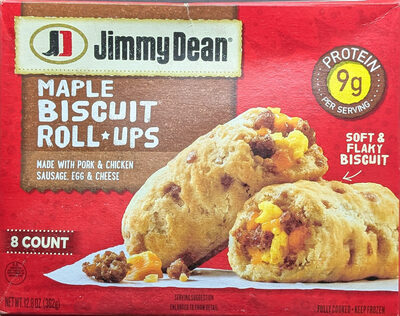
Maple Pork & Chicken Sausage. Egg & Cheese Biscuit Roll-Ups, Maple Pork & Chicken Sausage. Egg & Cheese
High in sodium — 30% DV per serving
High in saturated fat — 40% DV per serving
High in cholesterol — 22% DV per serving
311kcal
10Protein
17.8Fat
27.8Carbs
The Hillshire Brands Company
Maple Pork & Chicken Sausage. Egg & Cheese Biscuit Roll-Ups, Maple Pork & Chicken Sausage. Egg & Cheese
High in sodium — 30% DV per serving
High in saturated fat — 40% DV per serving
High in cholesterol — 22% DV per serving
311kcal
10Protein
17.8Fat
27.8Carbs
 The Hillshire Brands Company
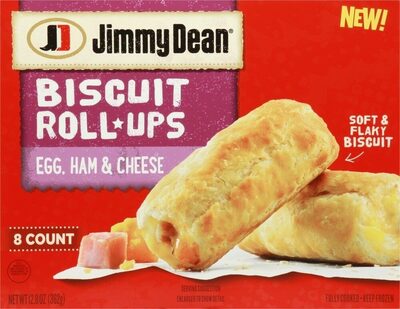
Egg, Ham & Cheese Biscuit Roll-Ups, Egg, Ham & Cheese
High in sodium — 31% DV per serving
High in saturated fat — 30% DV per serving
High in cholesterol — 27% DV per serving
—kcal
11.1Protein
13.3Fat
27.8Carbs
The Hillshire Brands Company
Egg, Ham & Cheese Biscuit Roll-Ups, Egg, Ham & Cheese
High in sodium — 31% DV per serving
High in saturated fat — 30% DV per serving
High in cholesterol — 27% DV per serving
—kcal
11.1Protein
13.3Fat
27.8Carbs
 The Hillshire Brands Company
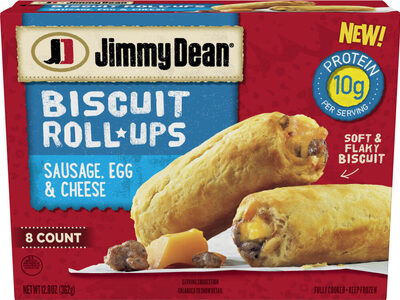
Sausage, Egg & Cheese Biscuit Roll-Ups, Sausage, Egg & Cheese
High in sodium — 32% DV per serving
High in saturated fat — 35% DV per serving
High in cholesterol — 23% DV per serving
300kcal
11.1Protein
16.7Fat
26.7Carbs
Tyson Foods Inc.
Jimmy Dean Sausage, Egg, & Cheese Biscuit Roll-Ups
High in sodium — 32% DV per serving
High in saturated fat — 34% DV per serving
High in cholesterol — 23% DV per serving
299kcal
10.7Protein
16.5Fat
27.1Carbs
The Hillshire Brands Company
Sausage, Egg & Cheese Biscuit Roll-Ups, Sausage, Egg & Cheese
High in sodium — 32% DV per serving
High in saturated fat — 35% DV per serving
High in cholesterol — 23% DV per serving
300kcal
11.1Protein
16.7Fat
26.7Carbs
Tyson Foods Inc.
Jimmy Dean Sausage, Egg, & Cheese Biscuit Roll-Ups
High in sodium — 32% DV per serving
High in saturated fat — 34% DV per serving
High in cholesterol — 23% DV per serving
299kcal
10.7Protein
16.5Fat
27.1Carbs