Auto-generated content.
This description was generated automatically and is pending editorial review.
Inaccuracies are possible. Found a mistake? Contact us.
Source
Animal-derived
Allergen
No
Role in food
Cream cheese is often used as a spread on bagels and crackers due to …
What it is
Cream cheese is a soft, mild-tasting fresh cheese made from milk and cream. It is typically made by combining milk and cream, pasteurizing the mixture, and then adding a starter culture and coagulant to thicken it. The whey is then drained off, and the cheese is processed to achieve its characteristic smooth texture.
Why it's used
Cream cheese is often used as a spread on bagels and crackers due to its creamy texture and mild flavor. It is also a popular ingredient in baking, particularly for cheesecakes, frostings, and fillings, where it adds richness and moisture. Its smooth consistency also makes it suitable for dips and savory spreads.
Health notes
Cream cheese is generally recognized as safe (GRAS) by the FDA when used as a food ingredient. It is a source of fat and protein. Regulatory bodies like EFSA have evaluated dairy products, but specific evaluations for cream cheese as an additive are not typically highlighted. Consumption of full-fat dairy products like cream cheese should be considered within the context of a balanced diet.
Allergen info
Cream cheese is derived from milk, which is one of the 9 FDA major allergens. It does not contain gluten.
Note:
This site presents label data from USDA FoodData Central for general information. It is not medical advice.
Check the package label; formulations change.
 Honey Smoked Fish Holdings LLC
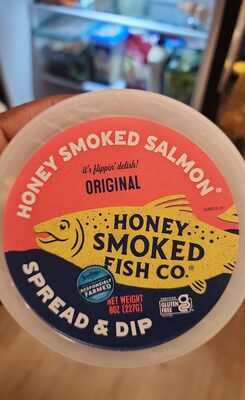
Original Honey Smoked Salmon Spread & Dip, Original Honey Smoked Salmon
235kcal
14.7Protein
17.6Fat
5.9Carbs
Honey Smoked Fish Holdings LLC
Original Honey Smoked Salmon Spread & Dip, Original Honey Smoked Salmon
235kcal
14.7Protein
17.6Fat
5.9Carbs