Enriched Wheat Flour Unbleached Wheat Flour
Auto-generated content. This description was generated automatically and is pending editorial review. Inaccuracies are possible. Found a mistake? Contact us.
What it is
Wheat flour is a powder made by grinding wheat kernels. "Unbleached" means the flour has been allowed to whiten naturally over time, rather than being treated with chemical bleaching agents. "Enriched" means that certain B vitamins (thiamine, riboflavin, niacin, folic acid) and iron, which are lost during the milling process, have been added back.
Why it's used
Wheat flour is a fundamental ingredient used to provide structure and texture in a wide variety of baked goods and processed foods. It is commonly found in breads, pastries, cakes, cookies, crackers, and pasta, serving as the primary base for these items.
Health notes
Wheat flour is a common food ingredient. Enriched flour helps prevent nutrient deficiencies by restoring essential vitamins and minerals. The FDA regulates the enrichment of flour to ensure certain nutrients are added back. For individuals with celiac disease or gluten sensitivity, consuming wheat flour can cause adverse reactions due to its gluten content. JECFA and EFSA do not typically evaluate basic food ingredients like wheat flour as food additives.
Allergen info
Wheat is one of the nine major food allergens identified by the FDA. It contains gluten, which can trigger adverse reactions in individuals with celiac disease or gluten sensitivity.
Products containing Enriched Wheat Flour Unbleached Wheat Flour
Compare products →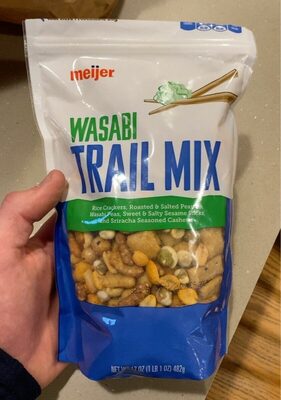 Meijer, Inc.
Wasabi Rice Crackers, Roasted & Salted Peanuts, Wasabi Peas, Sweet & Salty Sesame Sticks, And Sriracha Seasoned Cashews Trail Mix, Wasabi
500kcal
16.7Protein
30Fat
46.7Carbs
Smithfield Farmland Corp.
Sweet And Spicy James River Snack Mix, Sweet And Spicy James River
600kcal
16.7Protein
36.7Fat
50Carbs
Meijer, Inc.
Wasabi Rice Crackers, Roasted & Salted Peanuts, Wasabi Peas, Sweet & Salty Sesame Sticks, And Sriracha Seasoned Cashews Trail Mix, Wasabi
500kcal
16.7Protein
30Fat
46.7Carbs
Smithfield Farmland Corp.
Sweet And Spicy James River Snack Mix, Sweet And Spicy James River
600kcal
16.7Protein
36.7Fat
50Carbs