Auto-generated content.
This description was generated automatically and is pending editorial review.
Inaccuracies are possible. Found a mistake? Contact us.
Source
Not animal-derived
Allergen
No
Role in food
Fiber is added to foods to increase their nutritional value and to improve digestive …
What it is
Dietary fiber, often called "food fiber," is the part of plant-based foods that the body cannot digest. It is found in fruits, vegetables, whole grains, legumes, nuts, and seeds. Fiber can be added to foods during processing to increase their fiber content.
Why it's used
Fiber is added to foods to increase their nutritional value and to improve digestive health. It can also be used as a bulking agent or to modify texture. Fiber is commonly found in baked goods, cereals, and snack bars.
Health notes
Dietary fiber is recognized as an important part of a healthy diet. The U.S. Food and Drug Administration (FDA) recognizes fiber as a beneficial component of food. Major health organizations, including the World Health Organization (WHO), recommend adequate fiber intake for its role in digestive health and potentially reducing the risk of certain chronic diseases. Evidence suggests fiber can help with satiety and blood sugar management. JECFA has evaluated dietary fiber and established guidelines for its use.
Allergen info
Dietary fiber is not a major allergen. It is derived from plant sources and does not contain gluten.
Note:
This site presents label data from USDA FoodData Central for general information. It is not medical advice.
Check the package label; formulations change.
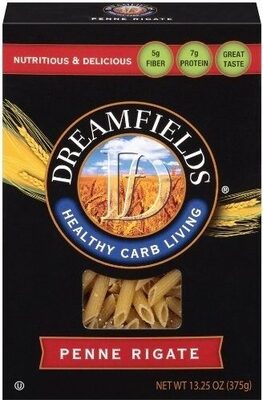 Dakota Growers Pasta Company, Inc.
Penne Rigate Pasta
339kcal
12.5Protein
1.8Fat
73.2Carbs
Dakota Growers Pasta Company, Inc.
Penne Rigate Pasta
339kcal
12.5Protein
1.8Fat
73.2Carbs
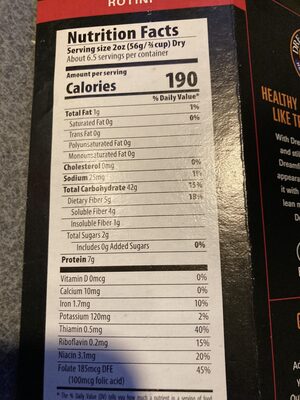 Dakota Growers Pasta Company, Inc.
Rotini Pasta
339kcal
12.5Protein
1.8Fat
73.2Carbs
Dakota Growers Pasta Company, Inc.
Rotini Pasta
339kcal
12.5Protein
1.8Fat
73.2Carbs