Fresh Asiago Cheese
What is Fresh Asiago Cheese?
Asiago is a firm, white cow's milk cheese originating from Italy. It is made from unpasteurized or pasteurized cow's milk and aged for varying periods, from 60 days for fresh Asiago to over a year for aged varieties. The aging process gives it a sharper, nuttier flavor and a crumblier texture.
Is Fresh Asiago Cheese vegan?
No. Fresh Asiago Cheese is animal-derived, so it is not vegan.
Is Fresh Asiago Cheese gluten-free?
It does not contain gluten.
Is Fresh Asiago Cheese a major allergen?
Asiago cheese is derived from milk, which is one of the 9 FDA major allergens.
What is Fresh Asiago Cheese used for?
Asiago cheese is used to add a savory, nutty flavor to a wide range of dishes.
Is Fresh Asiago Cheese safe?
Asiago cheese is a natural dairy product and is generally recognized as safe by the FDA.
Why it's used
Asiago cheese is used to add a savory, nutty flavor to a wide range of dishes. It can be grated over pasta, salads, and soups, or used in sauces, sandwiches, and baked goods. Manufacturers use it as a flavor ingredient, adding a distinct cheesy taste.
Health notes
Asiago cheese is a natural dairy product and is generally recognized as safe by the FDA. It is a source of protein, calcium, and other nutrients. Like other full-fat cheeses, it is high in saturated fat and sodium, which should be considered as part of a balanced diet. International bodies like JECFA and EFSA have evaluated cheese and dairy products.
Allergen info
Asiago cheese is derived from milk, which is one of the 9 FDA major allergens. It does not contain gluten.
Foods that contain Fresh Asiago Cheese
Compare products →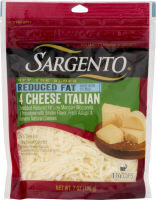 Sargento Foods Inc
4 Cheese Italian Reduced Fat Low Moisture Mozzarella, Provolone With Smoke Flavor, Fresh Asiago & Romano Traditional Cut Shredded Natural Cheeses, 4 Cheese Italian
286kcal
28.6Protein
17.9Fat
3.6Carbs
Sargento Foods Inc
4 Cheese Italian Reduced Fat Low Moisture Mozzarella, Provolone With Smoke Flavor, Fresh Asiago & Romano Traditional Cut Shredded Natural Cheeses, 4 Cheese Italian
286kcal
28.6Protein
17.9Fat
3.6Carbs
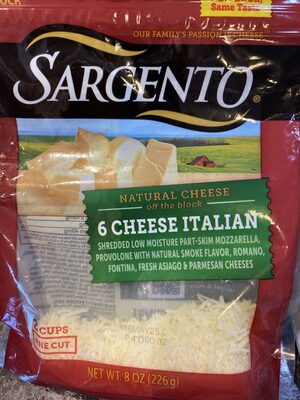 Sargento Foods Inc
6 Cheese Italian Shredded Low Moisture Part-Skim Mozzarella, Provolone With Smoke Flavor, Romano, Fontina, Fresh Asiago & Parmesan Natural Cheeses, 6 Cheese Italian
321kcal
25Protein
21.4Fat
7.1Carbs
Sargento Foods Inc
Sargento, 4 Shredded Italian Cheese
286kcal
28.6Protein
16.1Fat
3.6Carbs
Harris-Teeter Inc.
Kale Brussels Sprouts, Radicchio, Crushed Croutons, Asiago Cheese And Lemon Garlic Vinaigrette Dressing Chopped Salad, Kale
200kcal
5Protein
14Fat
15Carbs
Entertainment Production House Inc.
Fall Fruit & Nut
High in saturated fat — 35% DV per serving
270kcal
19.1Protein
14.3Fat
27.8Carbs
Sargento Foods Inc
6 Cheese Italian Shredded Low Moisture Part-Skim Mozzarella, Provolone With Smoke Flavor, Romano, Fontina, Fresh Asiago & Parmesan Natural Cheeses, 6 Cheese Italian
321kcal
25Protein
21.4Fat
7.1Carbs
Sargento Foods Inc
Sargento, 4 Shredded Italian Cheese
286kcal
28.6Protein
16.1Fat
3.6Carbs
Harris-Teeter Inc.
Kale Brussels Sprouts, Radicchio, Crushed Croutons, Asiago Cheese And Lemon Garlic Vinaigrette Dressing Chopped Salad, Kale
200kcal
5Protein
14Fat
15Carbs
Entertainment Production House Inc.
Fall Fruit & Nut
High in saturated fat — 35% DV per serving
270kcal
19.1Protein
14.3Fat
27.8Carbs
Learn more
Auto-generated content. This description was generated automatically and is pending editorial review. Inaccuracies are possible. Found a mistake? Contact us.