Oreochromis Niloticus
Auto-generated content. This description was generated automatically and is pending editorial review. Inaccuracies are possible. Found a mistake? Contact us.
What it is
Oreochromis niloticus, commonly known as Nile tilapia, is a species of cichlid fish native to Africa and the Middle East. It is now farmed worldwide, particularly in Asia and Latin America, for its mild flavor and white flesh. Nile tilapia is typically raised in aquaculture systems, such as ponds or tanks, and harvested for consumption.
Why it's used
Tilapia is primarily used as a source of protein in seafood dishes. Its mild flavor makes it versatile for various cooking methods like baking, frying, or grilling. It is frequently found in frozen fish products, seafood mixes, and as fillets in grocery stores.
Health notes
Tilapia is a good source of protein and is generally considered safe for consumption. The FDA regulates fish and seafood products to ensure safety. International bodies like the WHO/FAO's Joint Expert Committee on Food Additives (JECFA) have evaluated tilapia and other fish species. Concerns about contaminants like mercury or PCBs in fish are often related to the fish's environment and diet, rather than the species itself.
Allergen info
Tilapia is a fish, which is one of the 9 major allergens recognized by the FDA. Consumers with fish allergies should avoid tilapia.
Products containing Oreochromis Niloticus
Compare products →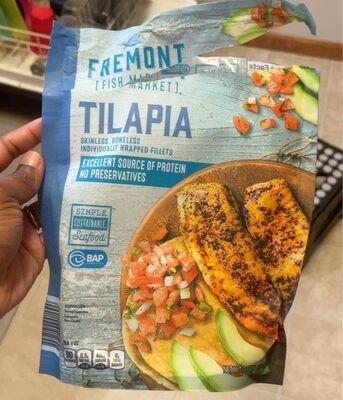 FREMONT
Tilapia Skinless, Boneless Individually Wrapped Fillets, Tilapia
88kcal
18.6Protein
1.8Fat
0Carbs
FREMONT
Tilapia Skinless, Boneless Individually Wrapped Fillets, Tilapia
88kcal
18.6Protein
1.8Fat
0Carbs
 FREMONT FISH MARKET
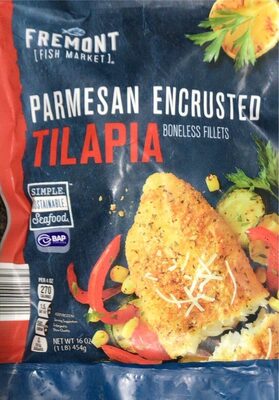
Parmesan Encrusted Tilapia Boneless Fillets, Parmesan
High in sodium — 25% DV per serving
239kcal
12.4Protein
12.4Fat
18.6Carbs
Changing Seas
Farm-Raised Tilapia Fillet
97kcal
19.5Protein
1.8Fat
0Carbs
Northgate Global Trading Company LLC
Tilapia Fillet
High in cholesterol — 20% DV per serving
88kcal
18.6Protein
0.9Fat
0.9Carbs
Wegmans Food Markets, Inc.
Skinless & Boneless Farm Raised Tilapia
97kcal
19.5Protein
1.3Fat
1.8Carbs
Marine Harvest USA, LLC
Tilapia Fillets
97kcal
20.4Protein
1.8Fat
0Carbs
Hy-Vee, Inc.
Tilapia Fillets
98kcal
19.6Protein
1.8Fat
0Carbs
FREMONT FISH MARKET
Parmesan Encrusted Tilapia Boneless Fillets, Parmesan
High in sodium — 25% DV per serving
239kcal
12.4Protein
12.4Fat
18.6Carbs
Changing Seas
Farm-Raised Tilapia Fillet
97kcal
19.5Protein
1.8Fat
0Carbs
Northgate Global Trading Company LLC
Tilapia Fillet
High in cholesterol — 20% DV per serving
88kcal
18.6Protein
0.9Fat
0.9Carbs
Wegmans Food Markets, Inc.
Skinless & Boneless Farm Raised Tilapia
97kcal
19.5Protein
1.3Fat
1.8Carbs
Marine Harvest USA, LLC
Tilapia Fillets
97kcal
20.4Protein
1.8Fat
0Carbs
Hy-Vee, Inc.
Tilapia Fillets
98kcal
19.6Protein
1.8Fat
0Carbs
 Hy-Vee, Inc.
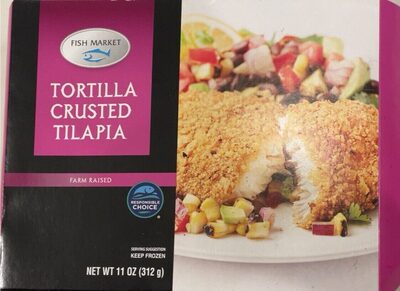
Tortilla Crusted Tilapia, Tortilla Crusted
220kcal
12.2Protein
11.0Fat
19.5Carbs
Hy-Vee, Inc.
Parmesan Crusted Tilapia, Parmesan Crusted
207kcal
12.2Protein
9.8Fat
18.3Carbs
Glencourt Inc.
Tilapia
High in cholesterol — 23% DV per serving
99kcal
19.7Protein
1.8Fat
0Carbs
Meijer, Inc.
Farm Raised Skinless & Boneless Tilapia Loins
80kcal
20.4Protein
0.9Fat
0Carbs
Meijer, Inc.
Farm Raised Skinless & Boneless Tilapia Fillets
80kcal
20.4Protein
0.9Fat
0Carbs
Hy-Vee, Inc.
Tortilla Crusted Tilapia, Tortilla Crusted
220kcal
12.2Protein
11.0Fat
19.5Carbs
Hy-Vee, Inc.
Parmesan Crusted Tilapia, Parmesan Crusted
207kcal
12.2Protein
9.8Fat
18.3Carbs
Glencourt Inc.
Tilapia
High in cholesterol — 23% DV per serving
99kcal
19.7Protein
1.8Fat
0Carbs
Meijer, Inc.
Farm Raised Skinless & Boneless Tilapia Loins
80kcal
20.4Protein
0.9Fat
0Carbs
Meijer, Inc.
Farm Raised Skinless & Boneless Tilapia Fillets
80kcal
20.4Protein
0.9Fat
0Carbs