Sheep's And Cow's Milk
Auto-generated content. This description was generated automatically and is pending editorial review. Inaccuracies are possible. Found a mistake? Contact us.
What it is
Milk from sheep and cows is a nutrient-rich liquid produced by female mammals. It is a primary source of nutrition for their young and has been consumed by humans for thousands of years. The milk is collected, pasteurized to kill harmful bacteria, and often homogenized to create a smooth texture.
Why it's used
Milk from sheep and cows is a fundamental ingredient in many dairy products like cheese, yogurt, and butter. It also serves as a liquid base for sauces, soups, and baked goods, contributing richness, moisture, and flavor. In processed foods, it can act as an emulsifier, helping to blend oil and water-based ingredients.
Health notes
Milk from sheep and cows is a source of protein, calcium, and vitamin D. The U.S. Food and Drug Administration (FDA) recognizes milk as Generally Recognized As Safe (GRAS). Major health organizations generally consider milk consumption to be part of a healthy diet when consumed in moderation. International bodies like the Joint FAO/WHO Expert Committee on Food Additives (JECFA) and the European Food Safety Authority (EFSA) have evaluated milk and its components.
Allergen info
Milk is one of the nine major allergens identified by the FDA. Individuals with a milk allergy should avoid all products containing sheep's or cow's milk.
Products containing Sheep's And Cow's Milk
Compare products →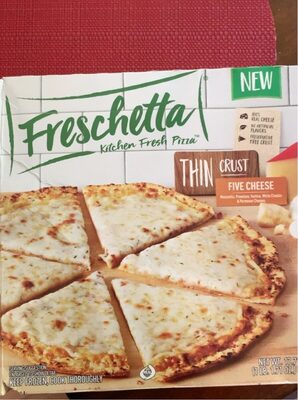 Schwan's Company
Thin Crust Five Cheese Pizza, Mozzarella; Provolone; Fontina; White Cheddar; Parmesan Cheeses
High in sodium — 29% DV per serving
High in saturated fat — 45% DV per serving
270kcal
10.3Protein
14.3Fat
24.6Carbs
Schwan's Company
Garden Veggie Green, Red And Yellow Peppers, Tomatoes & Onions Thin Crust Pizza, Garden Veggie
High in sodium — 24% DV per serving
High in saturated fat — 30% DV per serving
215kcal
7.4Protein
10.4Fat
24.4Carbs
Schwan's Company
Thin Crust Five Cheese Pizza, Mozzarella; Provolone; Fontina; White Cheddar; Parmesan Cheeses
High in sodium — 29% DV per serving
High in saturated fat — 45% DV per serving
270kcal
10.3Protein
14.3Fat
24.6Carbs
Schwan's Company
Garden Veggie Green, Red And Yellow Peppers, Tomatoes & Onions Thin Crust Pizza, Garden Veggie
High in sodium — 24% DV per serving
High in saturated fat — 30% DV per serving
215kcal
7.4Protein
10.4Fat
24.4Carbs