Soy Shortening
Auto-generated content. This description was generated automatically and is pending editorial review. Inaccuracies are possible. Found a mistake? Contact us.
What it is
Soy shortening is a solid fat made from soybean oil. It is produced by a process called hydrogenation, which makes the oil more stable and solid at room temperature. This process can create trans fats, though many manufacturers now use interesterification or use naturally solid soybean oil fractions to reduce or eliminate trans fats.
Why it's used
Manufacturers use soy shortening for its ability to create tender textures in baked goods and to provide a smooth mouthfeel. It is a common ingredient in cookies, cakes, pastries, and fried foods, helping to prevent sticking and improve shelf life.
Health notes
Soy shortening is generally recognized as safe (GRAS) by the FDA for use in food. Concerns have been raised about the potential health effects of trans fats, which can be present in some hydrogenated soy shortenings. Regulatory bodies like the WHO and EFSA have evaluated fats and oils, including those containing trans fats, and recommended limiting their intake. However, the health effects of soy shortening at typical consumption levels are still a subject of ongoing research and discussion.
Allergen info
Soy shortening is derived from soybeans, which are one of the nine major allergens recognized by the FDA. It does not contain gluten.
Products containing Soy Shortening
Compare products →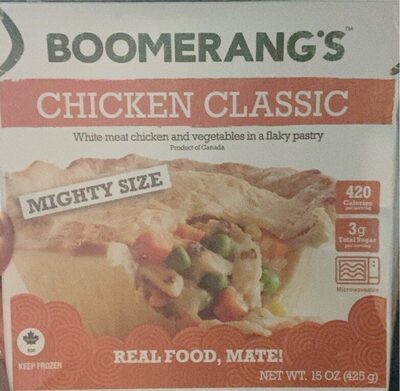 Boomerang's Foods, Inc.
Chicken Classic White Meat Chicken And Vegetables In A Flaky Pastry, Chicken Classic
High in sodium — 27% DV per serving
High in saturated fat — 55% DV per serving
221kcal
5.3Protein
13.7Fat
20Carbs
Boomerang's Foods, Inc.
Beef Classic All Natural Beef And Vegetables In A Flaky Pastry, Beef Classic
High in sodium — 28% DV per serving
High in saturated fat — 60% DV per serving
232kcal
4.2Protein
15.3Fat
20.5Carbs
Boomerang's Foods, Inc.
Chicken Classic White Meat Chicken And Vegetables In A Flaky Pastry, Chicken Classic
High in sodium — 27% DV per serving
High in saturated fat — 55% DV per serving
221kcal
5.3Protein
13.7Fat
20Carbs
Boomerang's Foods, Inc.
Beef Classic All Natural Beef And Vegetables In A Flaky Pastry, Beef Classic
High in sodium — 28% DV per serving
High in saturated fat — 60% DV per serving
232kcal
4.2Protein
15.3Fat
20.5Carbs
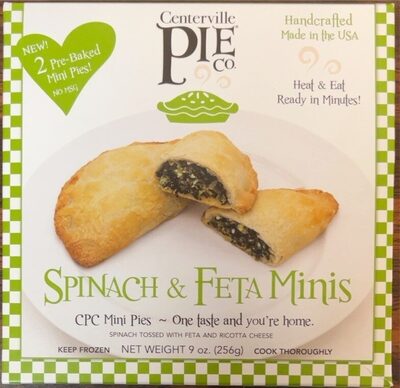 Centerville Pie Company, Inc
Spinach Tossed With Feta Minis And Ricotta Cheese, Spinach & Feta And Ricotta
High in sodium — 20% DV per serving
High in saturated fat — 60% DV per serving
305kcal
5.5Protein
20.3Fat
25Carbs
Centerville Pie Company, Inc
Spinach Tossed With Feta Minis And Ricotta Cheese, Spinach & Feta And Ricotta
High in sodium — 20% DV per serving
High in saturated fat — 60% DV per serving
305kcal
5.5Protein
20.3Fat
25Carbs