Swiss Cheese Pasteurized Milk
Auto-generated content. This description was generated automatically and is pending editorial review. Inaccuracies are possible. Found a mistake? Contact us.
What it is
Swiss cheese is a type of cheese originating from Switzerland. It is typically made from cow's milk and is known for its distinctive flavor and appearance, often featuring holes (eyes) caused by gas bubbles during fermentation. The cheese is aged for varying periods, which affects its texture and taste.
Why it's used
Swiss cheese is commonly used as a flavorful ingredient in a wide variety of dishes. It melts well, making it ideal for sandwiches, burgers, gratins, and casseroles. Its nutty and slightly sweet taste also complements many savory applications.
Health notes
Swiss cheese is a source of protein, calcium, and other nutrients. The FDA considers pasteurized milk, the primary ingredient, to be safe. Like other dairy products, it contains lactose and fat. Excessive intake of high-fat dairy products may be associated with certain health outcomes, but moderate consumption is generally considered part of a balanced diet. JECFA and EFSA have evaluated various dairy components.
Allergen info
Swiss cheese is derived from milk, which is one of the 9 FDA major allergens. It does not contain gluten.
Products containing Swiss Cheese Pasteurized Milk
Compare products →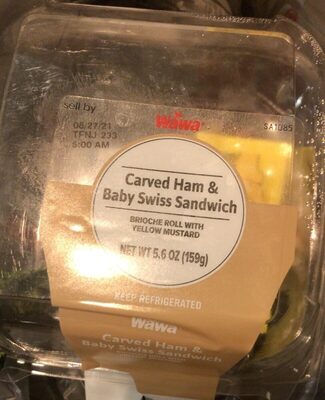 Wawa Incorporated
Brioche Roll With Honey Mustard Carved Ham & Baby Swiss Sandwich, Brioche Roll With Honey Mustard
High in sodium — 66% DV per serving
High in saturated fat — 35% DV per serving
High in cholesterol — 20% DV per serving
220kcal
12.7Protein
8.1Fat
24.9Carbs
S & S Roadrunner Sales Co.
Rooster Chicken, Alfredo Sauce And Mozzarella Cheese Pizza, Rooster
243kcal
13.0Protein
11.3Fat
23.2Carbs
Meninno Bros Mushroom Company
Spinach Flaky Crust Quiche Made With Whole Eggs, Spinach
High in saturated fat — 40% DV per serving
High in cholesterol — 30% DV per serving
212kcal
3.9Protein
15.4Fat
13.5Carbs
Wawa Incorporated
Brioche Roll With Honey Mustard Carved Ham & Baby Swiss Sandwich, Brioche Roll With Honey Mustard
High in sodium — 66% DV per serving
High in saturated fat — 35% DV per serving
High in cholesterol — 20% DV per serving
220kcal
12.7Protein
8.1Fat
24.9Carbs
S & S Roadrunner Sales Co.
Rooster Chicken, Alfredo Sauce And Mozzarella Cheese Pizza, Rooster
243kcal
13.0Protein
11.3Fat
23.2Carbs
Meninno Bros Mushroom Company
Spinach Flaky Crust Quiche Made With Whole Eggs, Spinach
High in saturated fat — 40% DV per serving
High in cholesterol — 30% DV per serving
212kcal
3.9Protein
15.4Fat
13.5Carbs