Auto-generated content.
This description was generated automatically and is pending editorial review.
Inaccuracies are possible. Found a mistake? Contact us.
Source
Not animal-derived
Allergen
No
Role in food
Manufacturers use tapioca and rice starches as thickeners and stabilizers in foods like sauces, …
What it is
Tapioca and rice are both starches derived from plants. Tapioca comes from the cassava root, while rice starch is extracted from rice grains. Both are processed to create a fine, white powder used in food manufacturing.
Why it's used
Manufacturers use tapioca and rice starches as thickeners and stabilizers in foods like sauces, gravies, soups, and puddings. They can also be used as fillers or to improve the texture of baked goods and processed meats.
Health notes
Tapioca and rice starches are generally recognized as safe (GRAS) by the FDA for use in food. They are primarily carbohydrates and provide energy. Regulatory bodies like JECFA and EFSA have evaluated starches, and they are widely used globally without significant health concerns at typical consumption levels.
Allergen info
Neither tapioca nor rice are among the nine major allergens identified by the FDA. They are also gluten-free.
Note:
This site presents label data from USDA FoodData Central for general information. It is not medical advice.
Check the package label; formulations change.
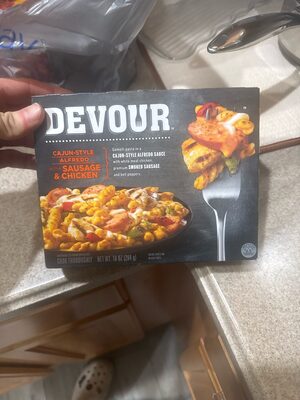 Kraft Heinz Foods Company
Cajun-Style Alfredo With Sausage & Chicken, Cajun-Style
High in sodium — 45% DV per serving
High in saturated fat — 50% DV per serving
High in cholesterol — 25% DV per serving
144kcal
9.5Protein
6.7Fat
12.0Carbs
Publix Super Markets, Inc.
Beef Bourguignon With Garlic Parmesan Potatoes
High in sodium — 56% DV per serving
High in saturated fat — 40% DV per serving
High in cholesterol — 32% DV per serving
143kcal
8.9Protein
7.5Fat
10.7Carbs
Kraft Heinz Foods Company
Cajun-Style Alfredo With Sausage & Chicken, Cajun-Style
High in sodium — 45% DV per serving
High in saturated fat — 50% DV per serving
High in cholesterol — 25% DV per serving
144kcal
9.5Protein
6.7Fat
12.0Carbs
Publix Super Markets, Inc.
Beef Bourguignon With Garlic Parmesan Potatoes
High in sodium — 56% DV per serving
High in saturated fat — 40% DV per serving
High in cholesterol — 32% DV per serving
143kcal
8.9Protein
7.5Fat
10.7Carbs