Auto-generated content.
This description was generated automatically and is pending editorial review.
Inaccuracies are possible. Found a mistake? Contact us.
Source
Unknown
Not yet classified by editors
Allergen
No
Role in food
Manufacturers add Vitamin A Palmitate to fortify foods, meaning they add nutrients to increase …
What it is
Vitamin A Palmitate is a form of vitamin A, an essential nutrient for vision, immune function, and cell growth. It is made by combining vitamin A with palmitic acid, which is often derived from palm oil.
Why it's used
Manufacturers add Vitamin A Palmitate to fortify foods, meaning they add nutrients to increase the food's overall nutritional value. It is commonly found in dairy products, cereals, and baked goods to help consumers meet their daily vitamin A requirements.
Health notes
The FDA lists Vitamin A Palmitate as Generally Recognized As Safe (GRAS) for use in food. It is an essential nutrient, and consuming adequate amounts is important for health. JECFA and EFSA have evaluated vitamin A and its derivatives. Excessive intake of vitamin A can lead to toxicity, but this is unlikely from typical food consumption alone.
Allergen info
Not a major allergen. Palmitic acid can be derived from palm oil, which is not one of the major allergens.
Note:
This site presents label data from USDA FoodData Central for general information. It is not medical advice.
Check the package label; formulations change.
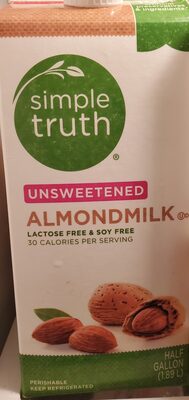 The Kroger Co.
Unsweetened Almondmilk, Unsweetened
17kcal
0.4Protein
1.2Fat
0.8Carbs
The Kroger Co.
Unsweetened Almondmilk, Unsweetened
17kcal
0.4Protein
1.2Fat
0.8Carbs
 The Kroger Co.
Kroger, Homestyle Waffles
257kcal
5.7Protein
10Fat
38.6Carbs
The Kroger Co.
Kroger, Homestyle Waffles
257kcal
5.7Protein
10Fat
38.6Carbs