Auto-generated content.
This description was generated automatically and is pending editorial review.
Inaccuracies are possible. Found a mistake? Contact us.
Source
Not animal-derived
Allergen
No
Role in food
Manufacturers use whipped topping as a decorative element and a creamy topping for desserts …
What it is
Whipped topping is a dairy-free alternative to whipped cream. It is typically made from water, vegetable oils (like palm or coconut oil), corn syrup, and emulsifiers and stabilizers to create a light, airy texture.
Why it's used
Manufacturers use whipped topping as a decorative element and a creamy topping for desserts like cakes, pies, and fruit salads. Its stability makes it a good choice for applications where traditional whipped cream might not hold its shape.
Health notes
Whipped topping is generally recognized as safe (GRAS) by the FDA when used as intended. It is primarily composed of fats and sugars, and like other high-fat, high-sugar foods, excessive consumption may contribute to health concerns. International bodies like JECFA have evaluated many of the individual ingredients used in whipped toppings.
Allergen info
Whipped topping is not a major allergen. It does not contain milk, egg, fish, shellfish, tree nuts, peanuts, wheat, soy, or sesame. It is also gluten-free.
Note:
This site presents label data from USDA FoodData Central for general information. It is not medical advice.
Check the package label; formulations change.
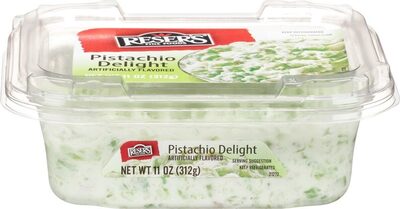 Reser's Fine Foods, Inc.
Pistachio Delight, Pistachio
136kcal
0.9Protein
3.6Fat
26.4Carbs
U.S. Gold
Nasto's, Ice Cream Cake
High in saturated fat — 50% DV per serving
High in cholesterol — 20% DV per serving
239kcal
3.5Protein
14.2Fat
24.8Carbs
Reser's Fine Foods, Inc.
Pistachio Delight, Pistachio
136kcal
0.9Protein
3.6Fat
26.4Carbs
U.S. Gold
Nasto's, Ice Cream Cake
High in saturated fat — 50% DV per serving
High in cholesterol — 20% DV per serving
239kcal
3.5Protein
14.2Fat
24.8Carbs