Whole Cage-free Eggs
Auto-generated content. This description was generated automatically and is pending editorial review. Inaccuracies are possible. Found a mistake? Contact us.
What it is
Whole cage-free eggs come from hens raised in open indoor spaces, allowing them to move freely. They are a natural source of protein and nutrients, and are used in their whole form, including the yolk and white.
Why it's used
Eggs act as a binder, emulsifier, and leavening agent in baked goods and pasta. They contribute to texture, richness, and color in products like pizza crusts, breads, and ravioli.
Health notes
Eggs are a nutrient-dense food, providing protein, vitamins, and minerals. The FDA considers eggs to be a safe and wholesome food. International bodies like JECFA and EFSA have evaluated eggs and their components. Research on eggs and health outcomes like cholesterol levels has yielded mixed results, with recent reviews suggesting dietary cholesterol may have less impact on blood cholesterol for most people than previously thought.
Allergen info
Eggs are one of the 9 major food allergens identified by the FDA. They do not contain gluten.
Products containing Whole Cage-free Eggs
Compare products →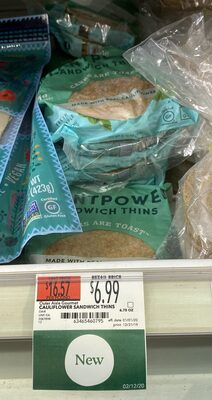 OUTER AISLE
Original Sandwich Thins, Original
156kcal
12.5Protein
7.8Fat
6.2Carbs
The Fresh Market, Inc.
Porcini Mushroom Ravioli
High in sodium — 21% DV per serving
High in saturated fat — 35% DV per serving
High in cholesterol — 23% DV per serving
271kcal
10.6Protein
14.1Fat
25.9Carbs
Outer Aisle Gourmet, LLC
Jalapeno Pizza Crusts, Jalapeno
High in cholesterol — 28% DV per serving
169kcal
14.1Protein
8.4Fat
5.6Carbs
OUTER AISLE
Original Sandwich Thins, Original
156kcal
12.5Protein
7.8Fat
6.2Carbs
The Fresh Market, Inc.
Porcini Mushroom Ravioli
High in sodium — 21% DV per serving
High in saturated fat — 35% DV per serving
High in cholesterol — 23% DV per serving
271kcal
10.6Protein
14.1Fat
25.9Carbs
Outer Aisle Gourmet, LLC
Jalapeno Pizza Crusts, Jalapeno
High in cholesterol — 28% DV per serving
169kcal
14.1Protein
8.4Fat
5.6Carbs
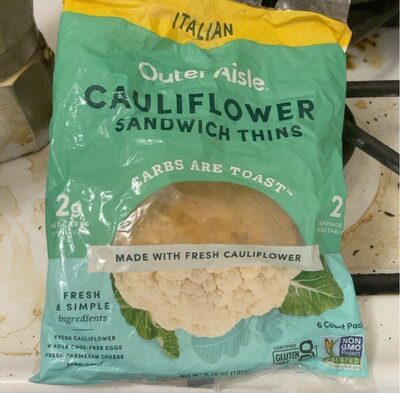 Outer Aisle Gourmet, LLC
Italian Sandwich Thins, Italian
156kcal
12.5Protein
7.8Fat
6.2Carbs
Outer Aisle Gourmet, LLC
Italian Sandwich Thins, Italian
156kcal
12.5Protein
7.8Fat
6.2Carbs
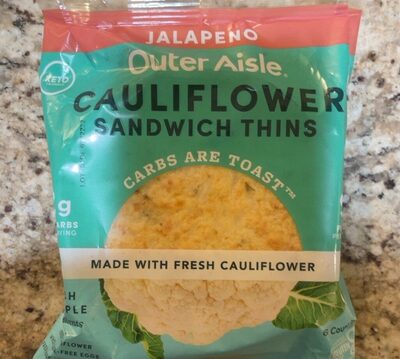 Outer Aisle Gourmet, LLC
Jalapeno Sandwich Thins, Jalapeno
156kcal
12.5Protein
7.8Fat
6.2Carbs
Outer Aisle Gourmet, LLC
Jalapeno Sandwich Thins, Jalapeno
156kcal
12.5Protein
7.8Fat
6.2Carbs
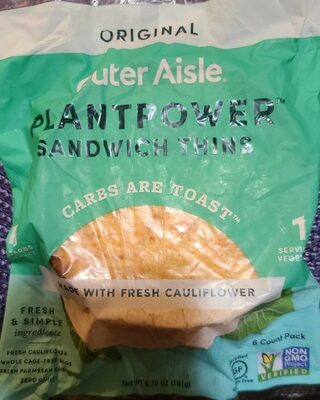 Outer Aisle Gourmet, LLC
Original Sandwich Thins
156kcal
12.5Protein
7.8Fat
6.2Carbs
The Fresh Market, Inc.
Ravioli
High in saturated fat — 35% DV per serving
High in cholesterol — 23% DV per serving
271kcal
12.9Protein
12.9Fat
27.1Carbs
Outer Aisle Gourmet, LLC
Original Sandwich Thins
156kcal
12.5Protein
7.8Fat
6.2Carbs
The Fresh Market, Inc.
Ravioli
High in saturated fat — 35% DV per serving
High in cholesterol — 23% DV per serving
271kcal
12.9Protein
12.9Fat
27.1Carbs