Auto-generated content.
This description was generated automatically and is pending editorial review.
Inaccuracies are possible. Found a mistake? Contact us.
Source
Not animal-derived
Allergen
No
Role in food
Manufacturers add xanthan gum to foods as a thickener and stabilizer. It helps prevent …
What it is
Xanthan gum is a polysaccharide, a type of carbohydrate, produced by the fermentation of sugar by a specific bacterium, *Xanthomonas campestris*. The process involves growing the bacteria in a liquid medium, then isolating and drying the gum that is produced.
Why it's used
Manufacturers add xanthan gum to foods as a thickener and stabilizer. It helps prevent ingredients from separating and improves the texture and consistency of products like sauces, dressings, and baked goods.
Health notes
Xanthan gum is generally recognized as safe (GRAS) by the FDA for use in food. It is poorly digested and passes through the body largely unchanged. International bodies like JECFA and EFSA have evaluated xanthan gum. At typical consumption levels, it is not associated with adverse health effects.
Allergen info
Xanthan gum is not derived from any of the nine FDA major allergens and does not contain gluten.
Note:
This site presents label data from USDA FoodData Central for general information. It is not medical advice.
Check the package label; formulations change.
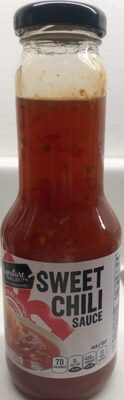 Safeway, Inc.
Sweet Chili Sauce, Sweet Chili
High in added sugars — 30% DV per serving
—kcal
0Protein
0Fat
60Carbs
Safeway, Inc.
Sweet Chili Sauce, Sweet Chili
High in added sugars — 30% DV per serving
—kcal
0Protein
0Fat
60Carbs
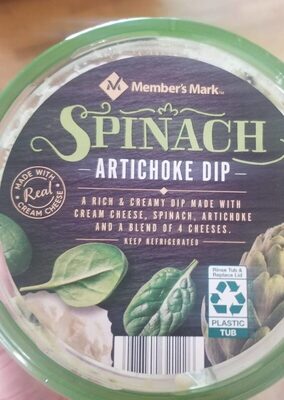 Wal-Mart Stores, Inc.
Spinach Artichoke Dip, Spinach
267kcal
6.7Protein
23.3Fat
6.7Carbs
Wal-Mart Stores, Inc.
Spinach Artichoke Dip, Spinach
267kcal
6.7Protein
23.3Fat
6.7Carbs