Cultured Organic Soybean
Auto-generated content. This description was generated automatically and is pending editorial review. Inaccuracies are possible. Found a mistake? Contact us.
What it is
Cultured organic soybean refers to soybeans that have undergone a fermentation process, often using specific bacterial cultures. This process is typically applied to whole soybeans to create products like tempeh. Organic soybeans are grown without synthetic pesticides or fertilizers.
Why it's used
Cultured organic soybeans are primarily used as a protein source and a base for fermented foods, most notably tempeh. Tempeh is a versatile ingredient used in a variety of dishes, including vegetarian and vegan meals, acting as a meat substitute.
Health notes
Cultured organic soybeans, as a food ingredient, are generally recognized as safe (GRAS) by the FDA. Fermentation can increase the bioavailability of nutrients in soybeans and may introduce beneficial probiotics. International bodies like JECFA have evaluated soy and its components. Evidence does not suggest adverse health effects from consuming cultured organic soybeans at typical dietary levels.
Allergen info
Soybeans are one of the nine major allergens identified by the FDA. Therefore, cultured organic soybeans are a major allergen.
Products containing Cultured Organic Soybean
Compare products →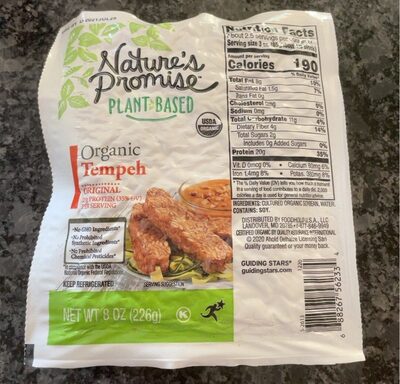 Ahold USA, Inc.
Original Tempeh, Original
224kcal
23.5Protein
9.4Fat
12.9Carbs
Ahold USA, Inc.
Original Tempeh, Original
224kcal
23.5Protein
9.4Fat
12.9Carbs
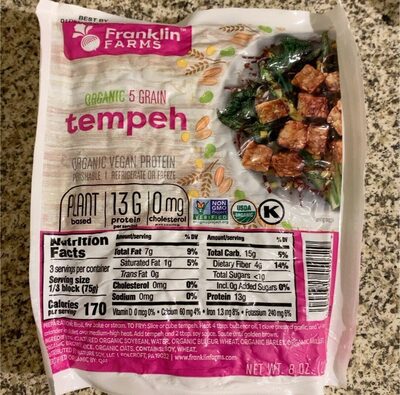 VeggieLand, LLC
5 Grain Organic Tempeh, 5 Grain
227kcal
17.3Protein
9.3Fat
20Carbs
Wegmans Food Markets, Inc.
Five Grain Organic Tempeh, Five Grain
227kcal
17.3Protein
8Fat
18.7Carbs
Wegmans Food Markets, Inc.
Original Organic Tempeh, Original
227kcal
22.7Protein
9.3Fat
13.3Carbs
VeggieLand, LLC
5 Grain Organic Tempeh, 5 Grain
227kcal
17.3Protein
9.3Fat
20Carbs
Wegmans Food Markets, Inc.
Five Grain Organic Tempeh, Five Grain
227kcal
17.3Protein
8Fat
18.7Carbs
Wegmans Food Markets, Inc.
Original Organic Tempeh, Original
227kcal
22.7Protein
9.3Fat
13.3Carbs
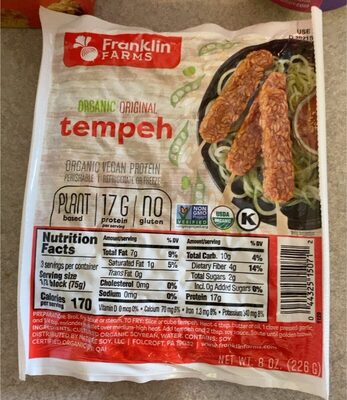 VeggieLand, LLC
Original Organic Tempeh, Original
227kcal
22.7Protein
9.3Fat
13.3Carbs
VeggieLand, LLC
Original Organic Tempeh, Original
227kcal
22.7Protein
9.3Fat
13.3Carbs