Auto-generated content.
This description was generated automatically and is pending editorial review.
Inaccuracies are possible. Found a mistake? Contact us.
Source
Not animal-derived
Allergen
No
Role in food
Enriched durum flour is primarily used in the production of pasta, giving it its …
What it is
Enriched durum flour is a type of flour made from durum wheat, a hard variety of wheat. It is finely ground and then enriched with specific vitamins and iron that are removed during the milling process. This process helps to restore some of the nutrients lost.
Why it's used
Enriched durum flour is primarily used in the production of pasta, giving it its characteristic firm texture and yellow color. It is also found in some bread products and other baked goods. Manufacturers use it for its gluten content, which provides structure and elasticity to dough.
Health notes
Enriched durum flour is a common ingredient in the U.S. food supply and is generally recognized as safe (GRAS) by the FDA. The enrichment process adds B vitamins (thiamin, riboflavin, niacin, folic acid) and iron, which can help prevent deficiencies. International bodies like JECFA have evaluated flour enrichment practices. While a source of carbohydrates, typical consumption as part of a balanced diet is not associated with adverse health effects.
Allergen info
Enriched durum flour is derived from wheat, which is one of the 9 FDA major allergens. It also contains gluten.
Note:
This site presents label data from USDA FoodData Central for general information. It is not medical advice.
Check the package label; formulations change.
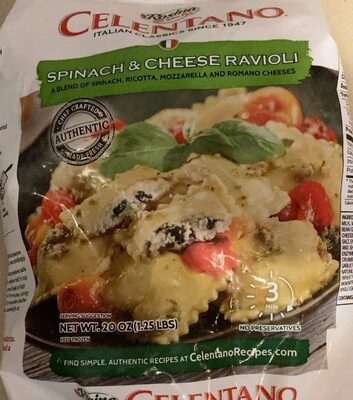 Rosina Food Products, Inc.
Spinach & Cheese A Blend Of Spinach, Ricotta, Mozzarella And Romano Cheeses Ravioli, Spinach & Cheese
High in saturated fat — 20% DV per serving
164kcal
8.2Protein
4.1Fat
24.0Carbs
Rosina Food Products, Inc.
Spinach & Cheese A Blend Of Spinach, Ricotta, Mozzarella And Romano Cheeses Ravioli, Spinach & Cheese
High in saturated fat — 20% DV per serving
164kcal
8.2Protein
4.1Fat
24.0Carbs