Sushi Seasoning
Auto-generated content. This description was generated automatically and is pending editorial review. Inaccuracies are possible. Found a mistake? Contact us.
What it is
Sushi seasoning is a liquid mixture used to flavor rice for sushi. It is typically made by combining rice vinegar, sugar, and salt. Some variations may also include ingredients like mirin (sweet rice wine) or kombu (seaweed).
Why it's used
Manufacturers add sushi seasoning to provide a sweet and tangy flavor to rice, which is a key component of sushi. It helps to balance the richness of fish and other fillings. It is most commonly found in sushi rice, but can also be used in marinades or salad dressings.
Health notes
Sushi seasoning is generally recognized as safe (GRAS) by the FDA when used as intended. The primary ingredients, vinegar, sugar, and salt, are common food components with established safety profiles. JECFA has evaluated some of the individual components, such as acetic acid (from vinegar), and established acceptable daily intakes. While excessive intake of sugar and salt can be linked to health concerns, the amounts used in typical sushi seasoning are unlikely to pose a risk.
Allergen info
Sushi seasoning is not typically derived from any of the 9 FDA major allergens. It does not contain gluten unless a specific ingredient like soy sauce (which may contain wheat) is added.
Products containing Sushi Seasoning
Compare products →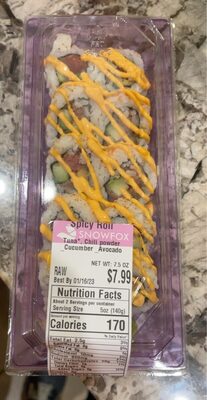 Japanese Food Express, Inc.
Spicy Tuna Roll, Spicy
150kcal
7.9Protein
3.6Fat
20.7Carbs
Japanese Food Express, Inc.
Spicy Tuna Roll, Spicy
150kcal
7.9Protein
3.6Fat
20.7Carbs
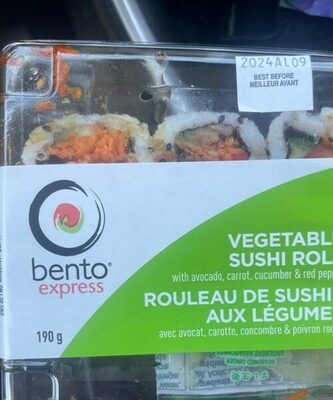 Brigaboom LLC
Vegetable Sushi With Avocado, Carrot, Cucumber & Red Pepper Roll, Vegetable With Avocado, Carrot, Cucumber & Red Pepper
High in sodium — 33% DV per serving
126kcal
2.6Protein
1.8Fat
24.7Carbs
Brigaboom LLC
Vegetable Sushi With Avocado, Carrot, Cucumber & Red Pepper Roll, Vegetable With Avocado, Carrot, Cucumber & Red Pepper
High in sodium — 33% DV per serving
126kcal
2.6Protein
1.8Fat
24.7Carbs
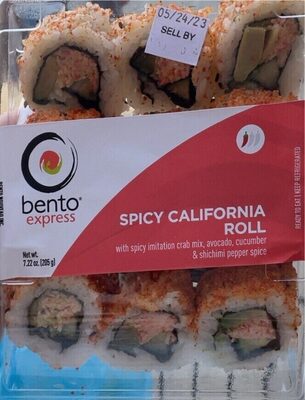 Brigaboom LLC
Spicy California Roll, Spicy California
High in sodium — 47% DV per serving
High in saturated fat — 45% DV per serving
High in added sugars — 24% DV per serving
156kcal
2.9Protein
—Fat
25.4Carbs
Brigaboom LLC
Spicy California Roll, Spicy California
High in sodium — 47% DV per serving
High in saturated fat — 45% DV per serving
High in added sugars — 24% DV per serving
156kcal
2.9Protein
—Fat
25.4Carbs