Whole Grain Wheat Flakes
Auto-generated content. This description was generated automatically and is pending editorial review. Inaccuracies are possible. Found a mistake? Contact us.
What it is
Whole grain wheat flakes are made from the entire wheat kernel, including the bran, germ, and endosperm. The wheat kernels are typically steamed, rolled flat into flakes, and then dried or toasted. This process helps to preserve the natural nutrients and fiber found in the whole grain.
Why it's used
Manufacturers use whole grain wheat flakes primarily as a source of dietary fiber and whole grains in various food products. They add texture and a nutty flavor, making them popular in breakfast cereals, granola bars, and baked goods like breads and muffins. Their nutritional profile also contributes to the appeal of these foods.
Health notes
Whole grain wheat flakes are recognized as a source of beneficial nutrients and fiber. The U.S. Food and Drug Administration (FDA) considers whole grains to be a healthy part of a balanced diet. Regulatory bodies like the European Food Safety Authority (EFSA) have evaluated the health benefits of whole grains, generally supporting their role in a healthy diet. At typical consumption levels, they are considered safe and contribute positively to digestive health.
Allergen info
Whole grain wheat flakes are derived from wheat, which is one of the nine FDA major allergens. They also contain gluten, a protein found in wheat that can cause adverse reactions in individuals with celiac disease or gluten sensitivity.
Products containing Whole Grain Wheat Flakes
Compare products →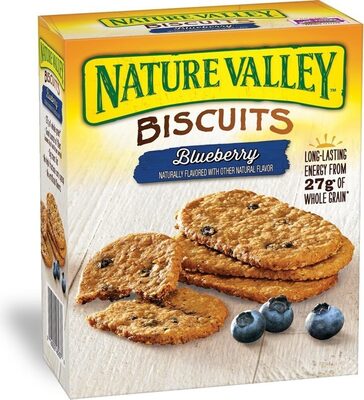 General Mills, Inc.
Biscuits, Blueberry
460kcal
8Protein
18Fat
68Carbs
General Mills, Inc.
Nature Valley, Breakfast Biscuits, Blueberry, Blueberry
460kcal
10Protein
18Fat
66Carbs
General Mills, Inc.
Biscuits, Blueberry
460kcal
8Protein
18Fat
68Carbs
General Mills, Inc.
Nature Valley, Breakfast Biscuits, Blueberry, Blueberry
460kcal
10Protein
18Fat
66Carbs
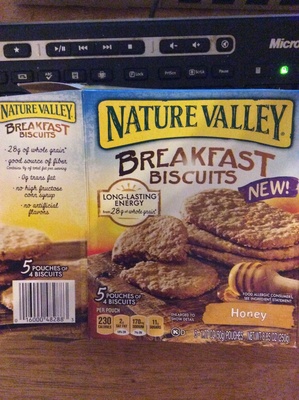 General Mills, Inc.
Nature Valley, Breakfast Biscuits, Honey, Honey
460kcal
8Protein
18Fat
66Carbs
General Mills, Inc.
Breakfast Biscuits, Lemon Poppy Seed
460kcal
8Protein
18Fat
66Carbs
General Mills, Inc.
Nature Valley, Biscuits, Lemon Poppy Seed, Lemon Poppy Seed
460kcal
8Protein
18Fat
66Carbs
General Mills, Inc.
Biscuits, Blueberry
460kcal
8Protein
18Fat
68Carbs
General Mills, Inc.
Nature Valley, Breakfast Biscuits, Honey, Honey
460kcal
8Protein
18Fat
66Carbs
General Mills, Inc.
Breakfast Biscuits, Lemon Poppy Seed
460kcal
8Protein
18Fat
66Carbs
General Mills, Inc.
Nature Valley, Biscuits, Lemon Poppy Seed, Lemon Poppy Seed
460kcal
8Protein
18Fat
66Carbs
General Mills, Inc.
Biscuits, Blueberry
460kcal
8Protein
18Fat
68Carbs
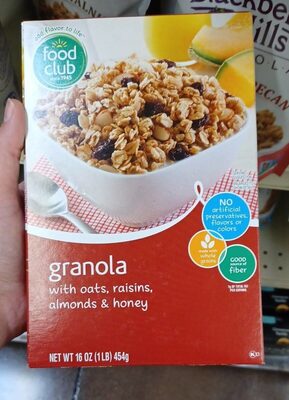 Topco Associates, Inc.
Granola With Oats, Raisins, Almonds & Honey, Oats, Raisins, Almonds & Honey
High in added sugars — 24% DV per serving
415kcal
9.2Protein
10.8Fat
73.8Carbs
Topco Associates, Inc.
Granola With Oats, Raisins, Almonds & Honey, Oats, Raisins, Almonds & Honey
High in added sugars — 24% DV per serving
415kcal
9.2Protein
10.8Fat
73.8Carbs
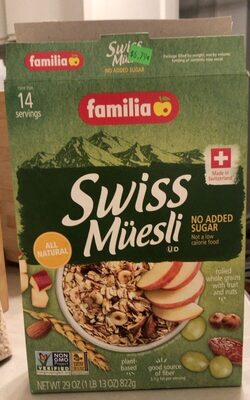 Specialty Food Services Ltd.
Swiss Muesli
368kcal
10.5Protein
5.3Fat
71.9Carbs
Specialty Food Services Ltd.
Swiss Muesli
368kcal
10.5Protein
5.3Fat
71.9Carbs