Auto-generated content.
This description was generated automatically and is pending editorial review.
Inaccuracies are possible. Found a mistake? Contact us.
Source
Not animal-derived
Allergen
No
Role in food
Nisin is used as a preservative to inhibit the growth of spoilage bacteria and …
What it is
Nisin is a natural antimicrobial peptide produced by certain strains of lactic acid bacteria (Lactococcus lactis). It is typically produced through fermentation and then purified. Nisin preparations often contain other ingredients, such as salt or whey, to improve stability and handling.
Why it's used
Nisin is used as a preservative to inhibit the growth of spoilage bacteria and yeasts, particularly in heat-treated foods. It is effective against a wide range of Gram-positive bacteria. Common applications include dairy products, canned goods, processed meats, and fermented foods.
Health notes
Nisin is Generally Recognized As Safe (GRAS) by the U.S. Food and Drug Administration (FDA) for use as a food preservative. International bodies like the Joint FAO/WHO Expert Committee on Food Additives (JECFA) and the European Food Safety Authority (EFSA) have also evaluated nisin. It is considered safe at typical consumption levels, and no adverse health effects have been linked to its use in food.
Allergen info
Nisin itself is not a major allergen. However, some nisin preparations may contain whey, which is derived from milk and is a major allergen.
Note:
This site presents label data from USDA FoodData Central for general information. It is not medical advice.
Check the package label; formulations change.
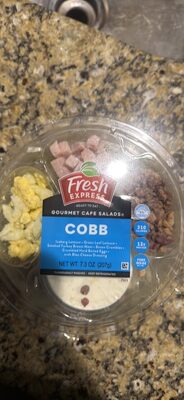 Fresh Express Incorporated
Cobb Iceberg Lettuce, Green Leaf Lettuce, Smoked Turkey Breast Meat, Bacon Crumbles, Crumbled Hard Boiled Eggs, With Bleu Cheese Dressing Salads
150kcal
6Protein
13Fat
3Carbs
Fresh Express Incorporated
Cobb Iceberg Lettuce, Green Leaf Lettuce, Smoked Turkey Breast Meat, Bacon Crumbles, Crumbled Hard Boiled Eggs, With Bleu Cheese Dressing Salads
150kcal
6Protein
13Fat
3Carbs