Auto-generated content.
This description was generated automatically and is pending editorial review.
Inaccuracies are possible. Found a mistake? Contact us.
Source
Not animal-derived
Allergen
No
Role in food
Semolina is prized for its firm texture and ability to hold its shape when …
What it is
Enriched durum semolina is a coarse flour made from durum wheat, a hard variety of wheat. It is the primary ingredient in most traditional pasta. The enrichment process adds back B vitamins (thiamin, riboflavin, niacin, folic acid) and iron that are lost during the milling of the flour.
Why it's used
Semolina is prized for its firm texture and ability to hold its shape when cooked, making it ideal for pasta. It is also used in some breads, couscous, and desserts. Manufacturers use it for its nutritional content and its role as a binder in processed foods.
Health notes
Durum semolina is a source of carbohydrates and provides some protein and fiber. The added vitamins and iron contribute to its nutritional value. The FDA considers enriched durum wheat flour to be Generally Recognized As Safe (GRAS). The Joint FAO/WHO Expert Committee on Food Additives (JECFA) has evaluated semolina and its components.
Allergen info
Enriched durum semolina is derived from wheat, which is one of the FDA's 9 major food allergens. It contains gluten.
Note:
This site presents label data from USDA FoodData Central for general information. It is not medical advice.
Check the package label; formulations change.
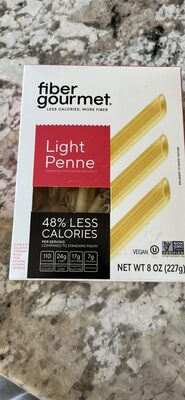 Fibergourmet, Inc.
Light Penne
214kcal
12.5Protein
1.8Fat
75Carbs
Contessa Premium Foods Inc.
Turkey Lasagna
High in sodium — 52% DV per serving
High in saturated fat — 45% DV per serving
High in cholesterol — 26% DV per serving
148kcal
9.5Protein
6.7Fat
12.4Carbs
Fibergourmet, Inc.
Light Penne
214kcal
12.5Protein
1.8Fat
75Carbs
Contessa Premium Foods Inc.
Turkey Lasagna
High in sodium — 52% DV per serving
High in saturated fat — 45% DV per serving
High in cholesterol — 26% DV per serving
148kcal
9.5Protein
6.7Fat
12.4Carbs