Auto-generated content.
This description was generated automatically and is pending editorial review.
Inaccuracies are possible. Found a mistake? Contact us.
Source
Not animal-derived
Allergen
No
Role in food
Lasagna noodles are primarily used as a structural component in baked pasta dishes, most …
What it is
Lasagna noodles are a type of wide, flat pasta, typically made from durum wheat semolina and water. They are a staple in Italian cuisine and form the base layers of the classic baked dish, lasagna. The noodles are usually boiled briefly before being layered with sauce, cheese, and other ingredients.
Why it's used
Lasagna noodles are primarily used as a structural component in baked pasta dishes, most notably lasagna. They provide a neutral base that absorbs the flavors of sauces and fillings. They are commonly found in frozen dinners, deli entrees, and other dough-based meal products.
Health notes
Lasagna noodles are a source of carbohydrates and provide some protein and fiber. The FDA considers pasta made from enriched semolina flour to be a basic staple food. Regulatory bodies like JECFA and EFSA have evaluated pasta ingredients. At typical consumption levels, they are a standard part of a balanced diet.
Allergen info
Lasagna noodles are typically made from wheat, which is one of the 9 FDA major allergens. They also contain gluten. Not suitable for individuals with celiac disease or gluten sensitivity.
Note:
This site presents label data from USDA FoodData Central for general information. It is not medical advice.
Check the package label; formulations change.
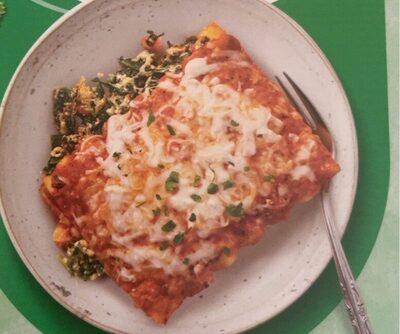 Wal-Mart Stores, Inc.
Vegetable 3 Layer Pasta Stuffed With Ricotta Cheese And Vegetables Topped With Mozzarella And Parmesan Cheese Lasagna, Vegetable
High in sodium — 32% DV per serving
High in saturated fat — 30% DV per serving
156kcal
9.3Protein
4.1Fat
19.3Carbs
Conagra Foodservice Frozen Prepared Foods
Vegetable Lasagna, Vegetable
High in sodium — 22% DV per serving
97kcal
4.4Protein
1.5Fat
14.5Carbs
Wal-Mart Stores, Inc.
Vegetable 3 Layer Pasta Stuffed With Ricotta Cheese And Vegetables Topped With Mozzarella And Parmesan Cheese Lasagna, Vegetable
High in sodium — 32% DV per serving
High in saturated fat — 30% DV per serving
156kcal
9.3Protein
4.1Fat
19.3Carbs
Conagra Foodservice Frozen Prepared Foods
Vegetable Lasagna, Vegetable
High in sodium — 22% DV per serving
97kcal
4.4Protein
1.5Fat
14.5Carbs