Auto-generated content.
This description was generated automatically and is pending editorial review.
Inaccuracies are possible. Found a mistake? Contact us.
Source
Not animal-derived
Allergen
No
Role in food
Manufacturers use soy sauce primarily as a flavoring agent to add a savory, salty, …
What it is
Soy sauce is a dark, salty liquid condiment made from fermented soybeans, wheat, salt, and water. The fermentation process, often involving yeast and mold, can take several months to over a year, developing its complex umami flavor.
Why it's used
Manufacturers use soy sauce primarily as a flavoring agent to add a savory, salty, and umami taste to foods. It is a staple in many Asian cuisines and is commonly found in marinades, stir-fries, dipping sauces, soups, and processed foods like frozen dinners and snacks.
Health notes
Soy sauce is generally recognized as safe (GRAS) by the FDA for its intended use as a food ingredient. However, it is high in sodium, and excessive sodium intake is linked to high blood pressure. International bodies like JECFA have evaluated soy sauce and its components. Some soy sauces may contain added ingredients like caramel color or preservatives, which have also undergone safety reviews.
Allergen info
Soy sauce is derived from soy, which is one of the 9 FDA major allergens. It also typically contains wheat, which contains gluten. Individuals with soy or gluten allergies or celiac disease should avoid it.
Note:
This site presents label data from USDA FoodData Central for general information. It is not medical advice.
Check the package label; formulations change.
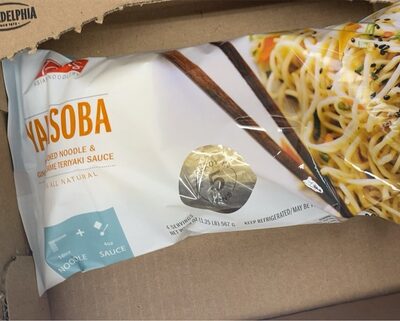 Wan Hua Foods Inc.
Yakisoba Pre-Cooked Noodle & Ginger Sesame Teriyaki Sauce, Yakisoba
High in sodium — 40% DV per serving
High in added sugars — 22% DV per serving
214kcal
5Protein
3.2Fat
41.4Carbs
Wan Hua Foods Inc.
Yakisoba Pre-Cooked Noodle & Ginger Sesame Teriyaki Sauce, Yakisoba
High in sodium — 40% DV per serving
High in added sugars — 22% DV per serving
214kcal
5Protein
3.2Fat
41.4Carbs