Sea Salt And Yeast
Auto-generated content. This description was generated automatically and is pending editorial review. Inaccuracies are possible. Found a mistake? Contact us.
What it is
Sea salt is produced by evaporating seawater, leaving behind salt crystals and trace minerals. Yeast is a microscopic, single-celled fungus, typically *Saccharomyces cerevisiae*, cultivated for its ability to ferment sugars.
Why it's used
Sea salt is primarily used to enhance the flavor of foods and also acts as a mild preservative. Yeast is mainly used as a leavening agent in baked goods, causing them to rise, and also contributes to savory flavor development in various snacks. These ingredients are commonly found in products like breads, crackers, chips, and pretzels.
Health notes
Both sea salt and yeast are generally recognized as safe (GRAS) by the FDA for their intended uses. Sea salt, like all forms of sodium, should be consumed in moderation, as high sodium intake can contribute to high blood pressure; the FDA Daily Value for sodium is 2,300 mg. Yeast is a common food ingredient and is generally well-tolerated, though some individuals may have sensitivities. JECFA has evaluated sodium chloride (the main component of sea salt) and yeast for food use.
Allergen info
Neither sea salt nor yeast are considered major allergens by the FDA. They do not contain gluten.
Products containing Sea Salt And Yeast
Compare products →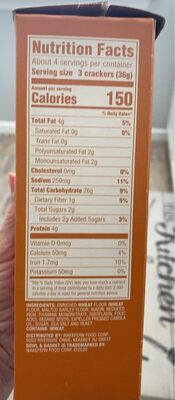 Wakefern Food Corporation
Specialty, Sesame Flatbread, Sesame
417kcal
11.1Protein
11.1Fat
72.2Carbs
Wakefern Food Corporation
Specialty, Sesame Flatbread, Sesame
417kcal
11.1Protein
11.1Fat
72.2Carbs
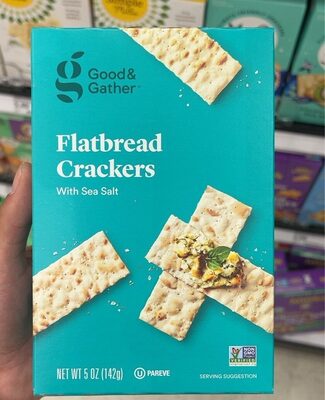 Target Stores
Flatbread Crackers With Sea Salt, Sea Salt
414kcal
10.3Protein
5.2Fat
79.3Carbs
Target Stores
Flatbread Crackers With Sea Salt, Sea Salt
414kcal
10.3Protein
5.2Fat
79.3Carbs