Wakame Seaweed
Auto-generated content. This description was generated automatically and is pending editorial review. Inaccuracies are possible. Found a mistake? Contact us.
What it is
Wakame is a type of edible seaweed, also known as Undaria pinnatifida. It is a brown seaweed that grows naturally in coastal waters and is also cultivated in many parts of the world, particularly in East Asia. After harvesting, it is typically dried or salted for preservation and later rehydrated for use in cooking.
Why it's used
Wakame is primarily used as a food ingredient, adding a distinct umami flavor and slightly chewy texture to dishes. It is commonly found in Japanese cuisine, especially in miso soup, salads, and as a side dish. Manufacturers use it to enhance the savory taste and nutritional profile of various food products.
Health notes
Wakame is a source of various vitamins and minerals, notably iodine, which is important for thyroid function. The FDA recognizes seaweed as Generally Recognized As Safe (GRAS) for use in food. International bodies like JECFA have evaluated seaweed and its components, but specific ADIs are not always set. While generally considered safe, excessive iodine intake from any source can affect thyroid health.
Allergen info
Wakame is not derived from one of the nine FDA major allergens. It does not contain gluten.
Products containing Wakame Seaweed
Compare products →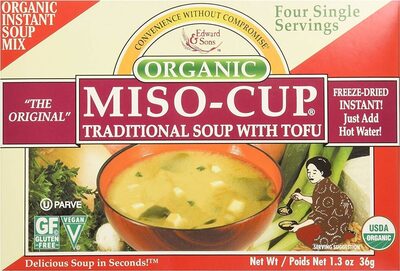 MISO-CUP
Organic Traditional Soup With Tofu
389kcal
22.2Protein
5.6Fat
55.6Carbs
Ce De Candy, Inc.
Edward & Sons, Miso-Cup, Savory Soup With Seaweed
389kcal
22.2Protein
16.7Fat
33.3Carbs
Good Food Business Enterprises LLC
Krazy Kraut, Juniper Caraway
High in sodium — 26% DV per serving
21kcal
1.4Protein
0Fat
5.6Carbs
Arco Distributors, Inc.
Wakame Flakes
33kcal
0Protein
0Fat
0Carbs
Glencourt Inc.
Miso Noodle Soup
High in sodium — 21% DV per serving
351kcal
16.2Protein
2.7Fat
64.9Carbs
Edward & Sons Trading Co., Inc
Miso-Cup, Natural Instant Soup
High in sodium — 42% DV per serving
194kcal
7.8Protein
3.9Fat
27.1Carbs
MISO-CUP
Organic Traditional Soup With Tofu
389kcal
22.2Protein
5.6Fat
55.6Carbs
Ce De Candy, Inc.
Edward & Sons, Miso-Cup, Savory Soup With Seaweed
389kcal
22.2Protein
16.7Fat
33.3Carbs
Good Food Business Enterprises LLC
Krazy Kraut, Juniper Caraway
High in sodium — 26% DV per serving
21kcal
1.4Protein
0Fat
5.6Carbs
Arco Distributors, Inc.
Wakame Flakes
33kcal
0Protein
0Fat
0Carbs
Glencourt Inc.
Miso Noodle Soup
High in sodium — 21% DV per serving
351kcal
16.2Protein
2.7Fat
64.9Carbs
Edward & Sons Trading Co., Inc
Miso-Cup, Natural Instant Soup
High in sodium — 42% DV per serving
194kcal
7.8Protein
3.9Fat
27.1Carbs
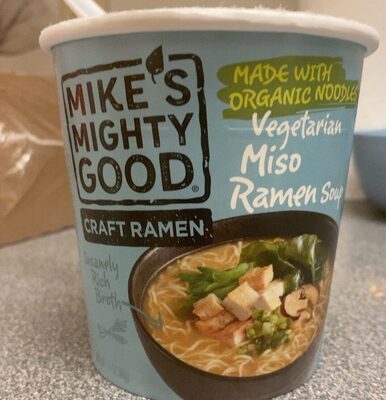 Bright People Foods, Inc.
Vegetarian Miso Ramen Soup, Vegetarian Miso Ramen
High in sodium — 37% DV per serving
417kcal
14.6Protein
8.3Fat
68.8Carbs
Bright People Foods, Inc.
Vegetarian Miso Ramen Soup, Vegetarian Miso Ramen
High in sodium — 37% DV per serving
417kcal
14.6Protein
8.3Fat
68.8Carbs
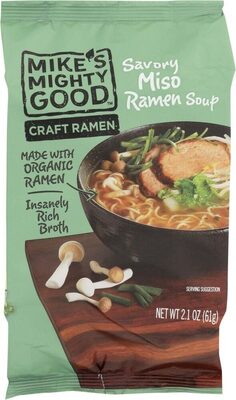 Bright People Foods, Inc.
Savory Miso Ramen Soup, Savory Miso
High in sodium — 51% DV per serving
410kcal
14.8Protein
9.8Fat
63.9Carbs
Bright People Foods, Inc.
Savory Miso Ramen Soup, Savory Miso
High in sodium — 51% DV per serving
410kcal
14.8Protein
9.8Fat
63.9Carbs
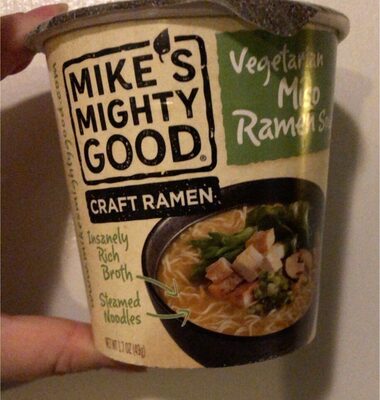 Bright People Foods, Inc.
Vegetarian Miso Ramen Soup, Vegetarian Miso
High in sodium — 38% DV per serving
408kcal
14.3Protein
8.2Fat
67.3Carbs
Ce De Candy, Inc.
Edward & Sons, Miso-Cup, Savory Soup With Seaweed
389kcal
22.2Protein
16.7Fat
33.3Carbs
Bright People Foods, Inc.
Vegetarian Miso Ramen Soup, Vegetarian Miso
High in sodium — 38% DV per serving
408kcal
14.3Protein
8.2Fat
67.3Carbs
Ce De Candy, Inc.
Edward & Sons, Miso-Cup, Savory Soup With Seaweed
389kcal
22.2Protein
16.7Fat
33.3Carbs