Whole Grain Buckwheat
Auto-generated content. This description was generated automatically and is pending editorial review. Inaccuracies are possible. Found a mistake? Contact us.
What it is
Buckwheat is a plant grown for its grain-like seeds. Despite its name, it is not related to wheat and is naturally gluten-free. The seeds are harvested and can be used whole or milled into flour.
Why it's used
Whole grain buckwheat is often used as a whole grain in foods like breads, cereals, and pancakes. It can also be milled into flour for baking. Its nutty flavor and chewy texture are appealing to consumers seeking whole grain options.
Health notes
Whole grain buckwheat is recognized as a source of dietary fiber, magnesium, and other nutrients. The FDA considers whole grains to be part of a healthy dietary pattern. JECFA and EFSA have evaluated buckwheat and its components, and it is generally recognized as safe (GRAS) for consumption in the US. Research suggests potential benefits for heart health and blood sugar management, though more studies are needed.
Allergen info
Buckwheat is not one of the 9 FDA major allergens. It is naturally gluten-free.
Products containing Whole Grain Buckwheat
Compare products →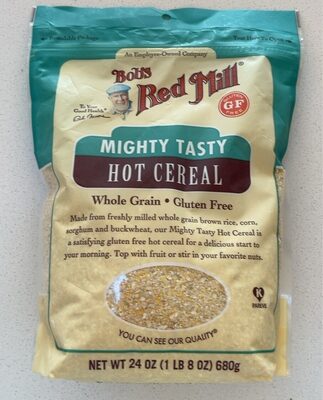 Bob's Red Mill Natural Foods, Inc.
Mighty Tasty Hot Cereal, Mighty Tasty
350kcal
7.5Protein
2.5Fat
77.5Carbs
Bob's Red Mill Natural Foods, Inc.
Gluten Free Mighty Tasty Hot Cereal
357kcal
7.1Protein
2.4Fat
76.2Carbs
Roman Meal Co.
Healthy Multi Grain Bread
233kcal
11.6Protein
3.5Fat
44.2Carbs
Bob's Red Mill Natural Foods, Inc.
Mighty Tasty Hot Cereal, Mighty Tasty
350kcal
7.5Protein
2.5Fat
77.5Carbs
Bob's Red Mill Natural Foods, Inc.
Gluten Free Mighty Tasty Hot Cereal
357kcal
7.1Protein
2.4Fat
76.2Carbs
Roman Meal Co.
Healthy Multi Grain Bread
233kcal
11.6Protein
3.5Fat
44.2Carbs