Auto-generated content.
This description was generated automatically and is pending editorial review.
Inaccuracies are possible. Found a mistake? Contact us.
Source
Not animal-derived
Allergen
No
Role in food
Shortening provides tenderness, a smooth texture, and a longer shelf life to baked goods. …
What it is
All-purpose shortening is a solid fat made from vegetable oils, such as soybean, cottonseed, or palm oil. It is processed to be solid at room temperature, often through hydrogenation, which changes the oil's structure. This process makes it a versatile ingredient for baking.
Why it's used
Shortening provides tenderness, a smooth texture, and a longer shelf life to baked goods. It is used as a fat in doughs and batters, helping to create flaky layers in pastries and a tender crumb in cakes. It is commonly found in cookies, cakes, biscuits, and pie crusts.
Health notes
In the US, shortening made from vegetable oils is generally recognized as safe (GRAS) by the FDA. Some shortenings contain trans fats, which are linked to negative health effects. However, manufacturers have largely removed trans fats from shortenings. JECFA and EFSA have evaluated fats and oils, including those used in shortening, and have established guidelines for their use. Evidence on the health effects of different types of fats continues to be studied.
Allergen info
Shortening is typically derived from vegetable oils and is not a major allergen. It does not contain gluten.
Note:
This site presents label data from USDA FoodData Central for general information. It is not medical advice.
Check the package label; formulations change.
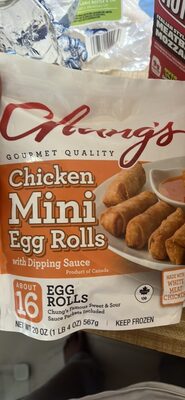 Chung's Foods, Inc.
Chicken Mini Egg Rolls, Chicken
High in sodium — 24% DV per serving
189kcal
6.6Protein
4.2Fat
30.2Carbs
Jerry's Enterprises Inc.
Milwaukee Rye Bread, Milwaukee Rye
High in sodium — 20% DV per serving
280kcal
10Protein
3Fat
50Carbs
Chung's Foods, Inc.
Chicken Mini Egg Rolls, Chicken
High in sodium — 24% DV per serving
189kcal
6.6Protein
4.2Fat
30.2Carbs
Jerry's Enterprises Inc.
Milwaukee Rye Bread, Milwaukee Rye
High in sodium — 20% DV per serving
280kcal
10Protein
3Fat
50Carbs