Raisins
Auto-generated content. This description was generated automatically and is pending editorial review. Inaccuracies are possible. Found a mistake? Contact us.
What it is
Raisins are dried grapes. They are produced by drying fresh grapes, either by sun-drying them directly on the vine or on trays, or through mechanical drying methods. This process removes most of the water content, concentrating their natural sugars and flavor.
Why it's used
Manufacturers add raisins to foods primarily for their natural sweetness, chewy texture, and fruit content. They are commonly found in breakfast cereals, baked goods like breads and muffins, snack mixes, and various dessert items.
Health notes
As a whole food, raisins are not regulated as a food additive by the FDA and therefore do not have GRAS status or specific additive approvals. They are a natural source of dietary fiber, antioxidants, and natural sugars. JECFA and EFSA do not typically evaluate whole foods like raisins as food additives. Raisins are generally considered a healthy food when consumed in moderation as part of a balanced diet.
Allergen info
Raisins are not a major allergen.
Products containing Raisins
Compare products →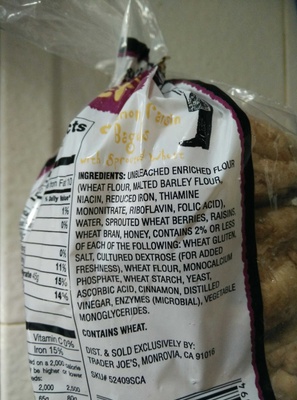 TRADER JOE'S
Bagel Josef's Cinnamon Raisin Bagel, With Sprouted Wheat
259kcal
10.6Protein
1.2Fat
52.9Carbs
TRADER JOE'S
Bagel Josef's Cinnamon Raisin Bagel, With Sprouted Wheat
259kcal
10.6Protein
1.2Fat
52.9Carbs
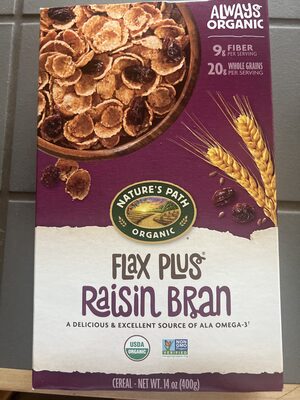 NATURE'S PATH
Raisin Bran Cereal
345kcal
10.9Protein
4.5Fat
74.5Carbs
NATURE'S PATH
Raisin Bran Cereal
345kcal
10.9Protein
4.5Fat
74.5Carbs