Whole
Auto-generated content. This description was generated automatically and is pending editorial review. Inaccuracies are possible. Found a mistake? Contact us.
What it is
The term "whole" refers to food ingredients that retain all their natural components. For grains, this means the bran, germ, and endosperm are all present, unlike refined grains where parts are removed. This ensures the ingredient keeps its full nutritional profile.
Why it's used
Manufacturers use whole ingredients, especially whole grains, to enhance the fiber, vitamin, and mineral content of foods. They also contribute to a distinct texture and flavor. These ingredients are commonly found in breakfast cereals, breads, pasta, and baked goods like cookies and biscuits.
Health notes
Whole grains and other whole food ingredients are generally recognized as safe (GRAS) by the FDA. They are valued for their nutritional content, including dietary fiber, B vitamins, and minerals like iron and magnesium. The Dietary Guidelines for Americans recommend consuming whole grains as part of a healthy eating pattern. As general food categories, whole ingredients are not typically subject to specific safety evaluations by bodies like JECFA or EFSA in the same way as food additives.
Allergen info
Depending on the specific "whole" ingredient, it may contain a major allergen. For example, whole wheat is one of the nine major FDA allergens and contains gluten. While whole oats are not a major allergen, they can be cross-contaminated with gluten during processing if not certified gluten-free.
Products containing Whole
Compare products →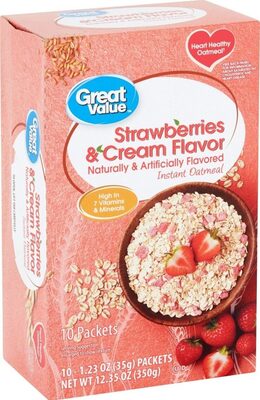 Wal-Mart Stores, Inc.
Strawberries & Cream Flavored Instant Oatmeal, Strawberries & Cream
371kcal
8.6Protein
5.7Fat
77.1Carbs
Wal-Mart Stores, Inc.
Strawberries & Cream Flavored Instant Oatmeal, Strawberries & Cream
371kcal
8.6Protein
5.7Fat
77.1Carbs