Auto-generated content.
This description was generated automatically and is pending editorial review.
Inaccuracies are possible. Found a mistake? Contact us.
Source
Not animal-derived
Allergen
No
Role in food
Manufacturers add benzoyl peroxide to flour to whiten it and to improve its baking …
What it is
Benzoyl peroxide is a chemical compound that appears as white crystals. It is synthesized industrially from benzoyl chloride and sodium peroxide. It is often used as a flour bleaching agent.
Why it's used
Manufacturers add benzoyl peroxide to flour to whiten it and to improve its baking qualities. It acts as a bleaching and maturing agent for dough. It is commonly found in baked goods such as cakes, cupcakes, croissants, muffins, and sweet rolls.
Health notes
In the United States, benzoyl peroxide is Generally Recognized As Safe (GRAS) by the FDA for use as a food additive. It is also approved for use in cosmetic products. The Joint FAO/WHO Expert Committee on Food Additives (JECFA) has evaluated benzoyl peroxide. Evidence does not suggest adverse health effects from typical dietary exposure.
Allergen info
Benzoyl peroxide is not derived from any of the nine major allergens recognized by the FDA. It does not contain gluten.
Note:
This site presents label data from USDA FoodData Central for general information. It is not medical advice.
Check the package label; formulations change.
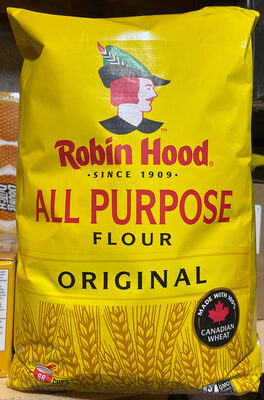 ROBIN HOOD
All Purpose Flour
367kcal
13.3Protein
1.3Fat
73.3Carbs
ROBIN HOOD
All Purpose Flour
367kcal
13.3Protein
1.3Fat
73.3Carbs