Cultured Organic Soybeans
Auto-generated content. This description was generated automatically and is pending editorial review. Inaccuracies are possible. Found a mistake? Contact us.
What it is
Cultured organic soybeans are soybeans that have been fermented by beneficial microorganisms, such as bacteria or yeast. This process, often called culturing or fermentation, breaks down complex compounds in the soybeans, making them easier to digest and enhancing their flavor and nutritional profile. Organic soybeans are grown without synthetic pesticides or fertilizers.
Why it's used
Cultured organic soybeans are often used as a plant-based protein source in vegetarian and vegan products. They are a key ingredient in foods like tempeh, miso, and soy sauce, providing a savory, umami flavor and a firm texture. They can also be found in meat alternatives, snacks, and dairy-free alternatives.
Health notes
Cultured organic soybeans are generally recognized as safe (GRAS) by the FDA for use in food. Fermentation can increase the bioavailability of nutrients and may produce beneficial compounds. Regulatory bodies like EFSA have evaluated soy products, and research suggests soy consumption may have various health effects. Evidence on specific health impacts is ongoing and can be complex.
Allergen info
Soy is one of the nine major allergens identified by the FDA. Individuals with a soy allergy should avoid products containing cultured organic soybeans.
Products containing Cultured Organic Soybeans
Compare products →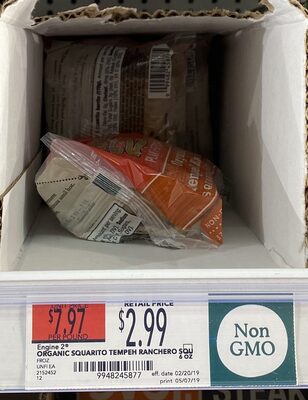 Whole Foods Market, Inc.
Organic Tempeh Ranchero Squarito Burrito, Tempeh Ranchero
135kcal
7.1Protein
2.9Fat
23.5Carbs
Whole Foods Market, Inc.
Organic Tempeh Ranchero Squarito Burrito, Tempeh Ranchero
135kcal
7.1Protein
2.9Fat
23.5Carbs
 Greenleaf Foods, SPC
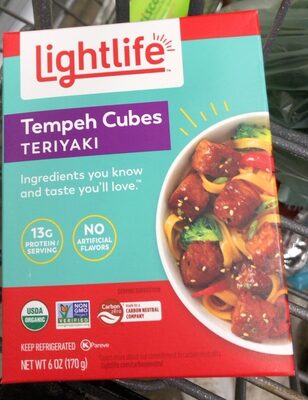
Lightlife Tempeh Cubes Teriyaki, 6 Oz
High in sodium — 25% DV per serving
212kcal
15.3Protein
4.1Fat
27.1Carbs
Greenleaf Foods, SPC
Lightlife Tempeh Cubes Teriyaki, 6 Oz
High in sodium — 25% DV per serving
212kcal
15.3Protein
4.1Fat
27.1Carbs
 Greenleaf Foods, SPC
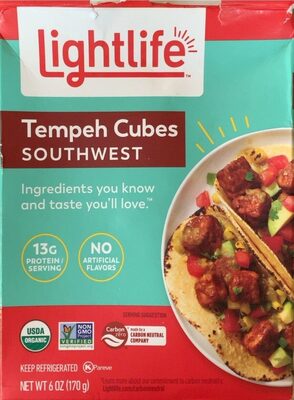
Southwest Tempeh Cubes
224kcal
15.3Protein
8.2Fat
21.2Carbs
Greenleaf Foods, SPC
Southwest Tempeh Cubes
224kcal
15.3Protein
8.2Fat
21.2Carbs
 Greenleaf Foods, SPC
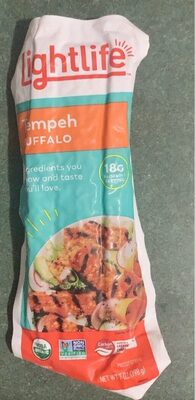
Tempeh Buffalo Precut Strips
High in sodium — 23% DV per serving
192kcal
18.2Protein
7.1Fat
13.1Carbs
Greenleaf Foods, SPC
Tempeh Buffalo Precut Strips
High in sodium — 23% DV per serving
192kcal
18.2Protein
7.1Fat
13.1Carbs
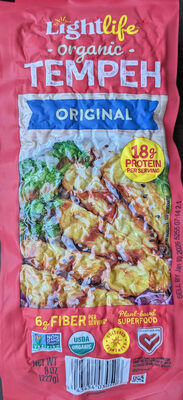 Greenleaf Foods, SPC
Original Tempeh
190kcal
21.4Protein
5.4Fat
14.3Carbs
Greenleaf Foods, SPC
Original Tempeh
190kcal
21.4Protein
5.4Fat
14.3Carbs
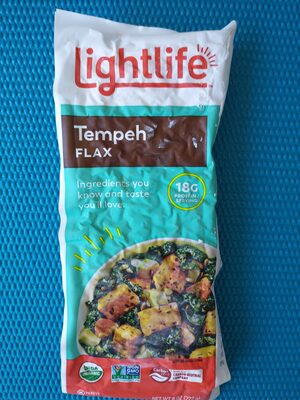 Greenleaf Foods, SPC
Flax Tempeh, Flax
214kcal
21.4Protein
9.5Fat
9.5Carbs
Greenleaf Foods, SPC
Flax Tempeh, Flax
214kcal
21.4Protein
9.5Fat
9.5Carbs
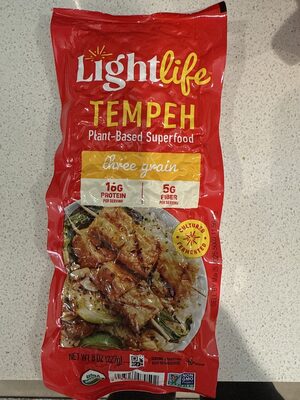 Greenleaf Foods, SPC
Three Grain Tempeh, Three Grain
226kcal
22.6Protein
9.5Fat
13.1Carbs
Greenleaf Foods, SPC
Three Grain Tempeh, Three Grain
226kcal
22.6Protein
9.5Fat
13.1Carbs
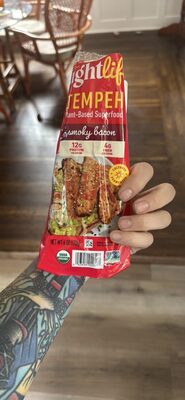 Greenleaf Foods, SPC
Smoky Bacon Tempeh, Smoky Bacon
High in sodium — 30% DV per serving
184kcal
15.8Protein
6.6Fat
13.2Carbs
Greenleaf Foods, SPC
Smoky Bacon Tempeh, Smoky Bacon
High in sodium — 30% DV per serving
184kcal
15.8Protein
6.6Fat
13.2Carbs