Cage-free Whole Eggs
Auto-generated content. This description was generated automatically and is pending editorial review. Inaccuracies are possible. Found a mistake? Contact us.
What it is
Whole eggs come from chickens and are a common food ingredient. The term 'cage-free' means the hens that laid the eggs were not kept in battery cages and had access to the outdoors or an open barn environment. They are used in their natural shell form or as liquid, frozen, or dried egg products.
Why it's used
Eggs are a versatile ingredient used for binding, emulsifying, and adding richness and flavor. They contribute to the structure and texture of baked goods, act as a leavening agent, and are a key component in sauces, dressings, and custards.
Health notes
Eggs are a source of protein, vitamins, and minerals. The U.S. Food and Drug Administration (FDA) considers eggs to be generally recognized as safe (GRAS) when used as intended. International bodies like the Joint FAO/WHO Expert Committee on Food Additives (JECFA) and the European Food Safety Authority (EFSA) have evaluated eggs and their components. Dietary cholesterol in eggs has been a subject of discussion, but current research and dietary guidelines suggest moderate egg consumption is acceptable for most healthy individuals.
Allergen info
Eggs are one of the nine major allergens identified by the FDA. People with an egg allergy should avoid consuming products containing eggs.
Products containing Cage-free Whole Eggs
Compare products →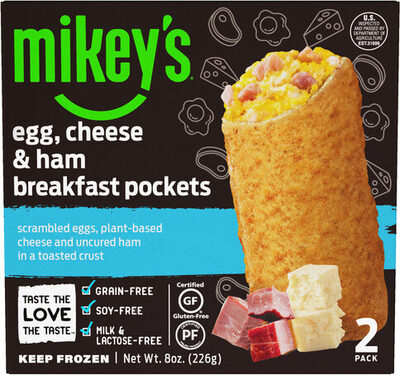 JMT Foods
Egg, Cheese & Ham Breakfast Pockets Scrambled Eggs, Plant-Based Cheese And Uncured Ham In A Toasted Crust, Egg, Cheese & Ham Breakfast Pockets
High in saturated fat — 25% DV per serving
High in cholesterol — 48% DV per serving
257kcal
8.8Protein
15.9Fat
20.4Carbs
JMT Foods
Sausage & Pepper Pockets Italian Sausage, Roasted Peppers, And Onions In A Toasted Crust, Sausage & Pepper Pockets
212kcal
7.1Protein
12.4Fat
20.4Carbs
JMT Foods
Egg, Cheese & Ham Breakfast Pockets Scrambled Eggs, Plant-Based Cheese And Uncured Ham In A Toasted Crust, Egg, Cheese & Ham Breakfast Pockets
High in saturated fat — 25% DV per serving
High in cholesterol — 48% DV per serving
257kcal
8.8Protein
15.9Fat
20.4Carbs
JMT Foods
Sausage & Pepper Pockets Italian Sausage, Roasted Peppers, And Onions In A Toasted Crust, Sausage & Pepper Pockets
212kcal
7.1Protein
12.4Fat
20.4Carbs