Wheat Bran
Auto-generated content. This description was generated automatically and is pending editorial review. Inaccuracies are possible. Found a mistake? Contact us.
What it is
Wheat bran is the tough, outer layer of the wheat kernel, which is separated from the inner part (endosperm) during the milling process to produce white flour. It is a natural byproduct of wheat processing and is rich in dietary fiber.
Why it's used
Manufacturers add wheat bran to foods primarily to boost their fiber content and enhance texture. It is commonly used in breakfast cereals, whole-grain breads, muffins, and other baked goods to improve nutritional value and provide a hearty mouthfeel.
Health notes
Wheat bran is a whole food component and is generally recognized as safe (GRAS) by the FDA when consumed as part of a normal diet. Its high dietary fiber content is known to support digestive health and regularity. JECFA and EFSA typically evaluate food additives, not whole food components like wheat bran, and thus have not set specific limits for it. There are no notable controversies regarding its safety at typical intake levels.
Allergen info
Wheat bran is derived from wheat, which is one of the nine major food allergens identified by the FDA. It contains gluten.
Products containing Wheat Bran
Compare products →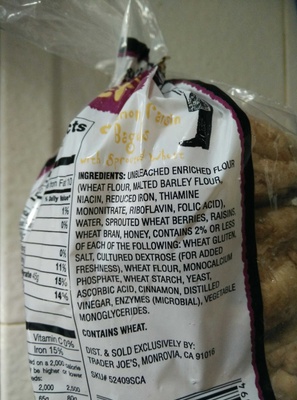 TRADER JOE'S
Bagel Josef's Cinnamon Raisin Bagel, With Sprouted Wheat
259kcal
10.6Protein
1.2Fat
52.9Carbs
NATURE'S PATH
Nature's Path, Flax Plus, Organic Multibran Flakes Cereal
367kcal
13.3Protein
5Fat
76.7Carbs
NATURE'S PATH ORGANIC
Flax Plus Cereal
400kcal
10Protein
3.3Fat
80Carbs
TRADER JOE'S
Bagel Josef's Cinnamon Raisin Bagel, With Sprouted Wheat
259kcal
10.6Protein
1.2Fat
52.9Carbs
NATURE'S PATH
Nature's Path, Flax Plus, Organic Multibran Flakes Cereal
367kcal
13.3Protein
5Fat
76.7Carbs
NATURE'S PATH ORGANIC
Flax Plus Cereal
400kcal
10Protein
3.3Fat
80Carbs
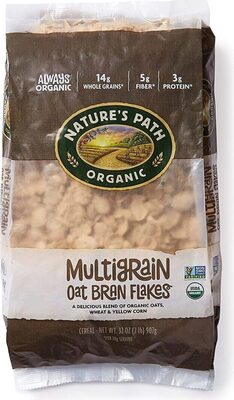 NATURE'S PATH
Multigrain Oatbran Cereal
367kcal
10Protein
3.3Fat
80Carbs
NATURE'S PATH
Multigrain Oatbran Cereal
367kcal
10Protein
3.3Fat
80Carbs
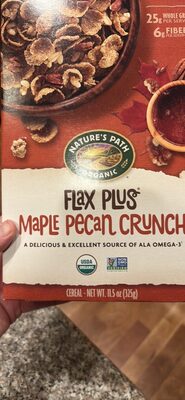 NATURE'S PATH
Maple Pecan Crunch
400kcal
10.9Protein
12.7Fat
69.1Carbs
NATURE'S PATH
Maple Pecan Crunch
400kcal
10.9Protein
12.7Fat
69.1Carbs